
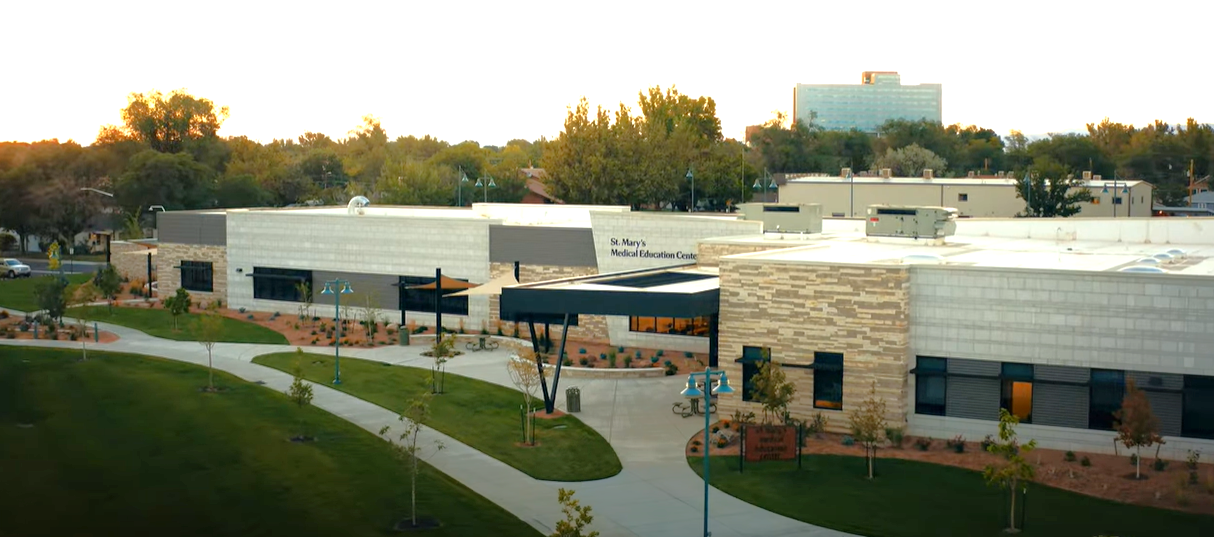
Welcome to the Colorado Mesa University Master of Science in Occupational Therapy Program!
Accreditation
In August of 2023, Colorado Mesa University’s Occupational Therapy Program was granted a seven-year accreditation from the Accreditation Council for Occupational Therapy Education (ACOTE) of the American Occupational Therapy Association (AOTA), located at 7501 Wisconsin Ave, Suite 510E, Bethesda, MD 20814, (301) 652-6611, www.acoteonline.org.
The National Board for Certification in Occupational Therapy (NBCOT) is the credentialing agency responsible for certifying occupational therapy practitioners in the United States. The NBCOT’s certification process ensures that occupational therapists have the knowledge and skills necessary to practice safely and effectively. Graduates of the MSOT program will be eligible to take the NBCOT exam. Successful completion of the NBCOT exam and state licensure are required to become an occupational therapist. The OTR/L credential indicates an occupational therapist is registered with the NBCOT and licensed to practice in their state.
The program will consist of didactic and clinical academic work over the course of 24 months.
Academic Requirements for Master of Science in Occupational TherapyCarousel slider with 5 rotating slides.
Pause or play carousel rotation with button controls.
Slider control tabs. Use the left and right arrow keys to change the displayed slide. Press tab to preview slide.



Interested in OT?
You can attend our virtual or in-person information session to learn more about CMU's Master of Science in Occupational Therapy Program has to offer. Click here to RSVP for our upcoming info sessions.
Mission
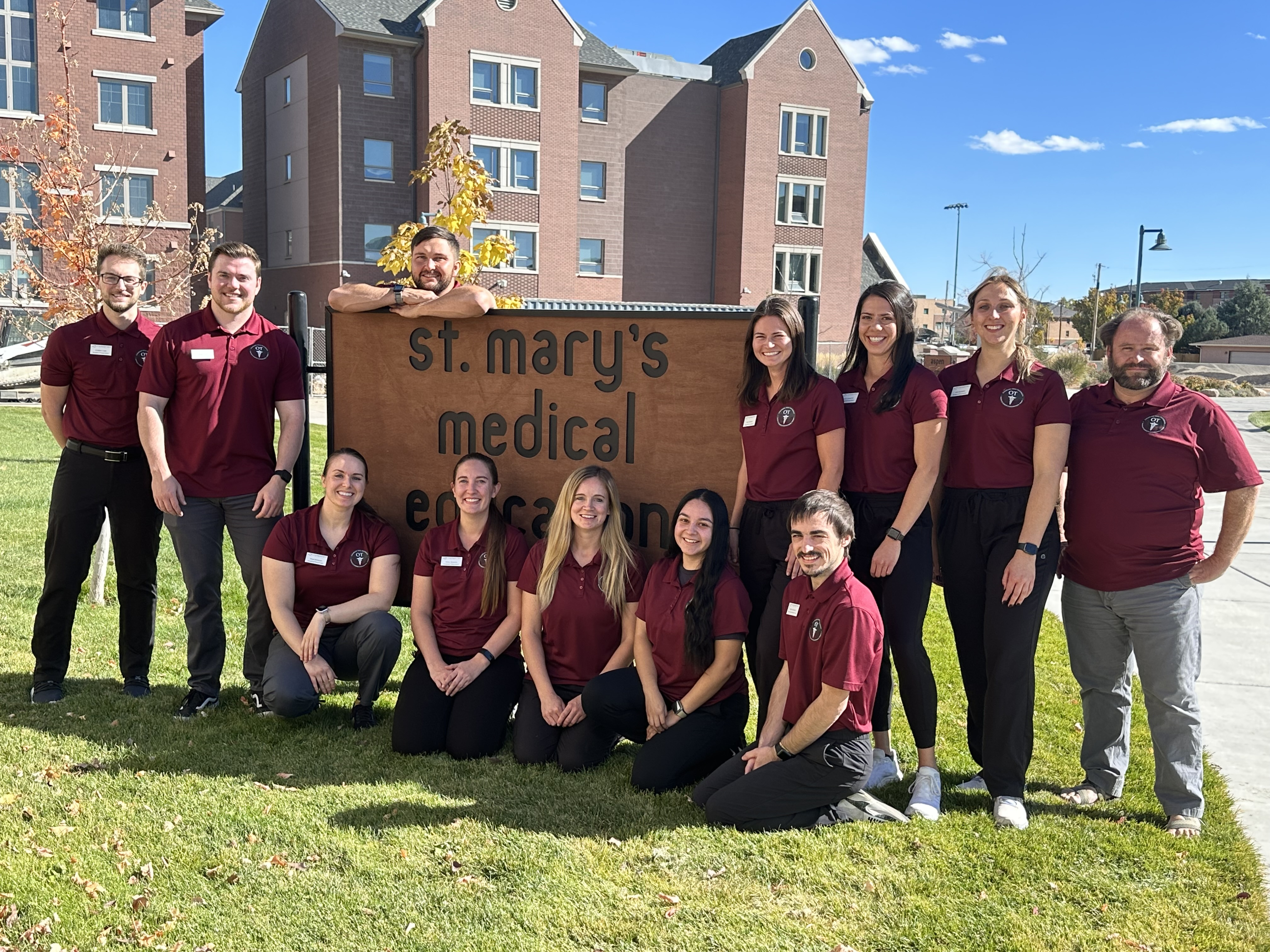
The mission of the Colorado Mesa University’s Occupational Therapy Program is to prepare students with the knowledge, skills, and professional behaviors necessary to become competent and ethical occupational therapy practitioners who are equipped to meet the needs of diverse populations (e.g., individuals, groups, and communities) in a variety of practice settings.
Vision
Colorado Mesa University’s Occupational Therapy Program strives to help students learn how to think (not what to think) by building skills in critical thinking, professional reasoning, and evidence-based practice; develop professional identities through participation in leadership, advocacy, and research; solve big problems through collaboration, innovation, and mutually enriching community partnerships; and foster a sense of belonging in a supportive classroom environment that emphasizes student-centered learning
Belonging
CMU is a Human Scale University where we are a model of the world we want to create. This model is based on our values where love, dignity, courage, resiliency, curiosity, humility and power are a part of everything we do. Our commitment to these principles allows us to offer you the opportunity for a better life through education as we teach you how to think, not what to believe.
Colorado Mesa University is committed to a safe and healthy campus environment dedicated to fostering a sense of belonging irrespective of factors including, but not limited to, age, race/ethnicity, language, national origin, religion/faith, gender, ability status, veteran status, immigration status, political ideology, socioeconomic background, or sexual orientation. We believe in the power of a Human Scale University to sustain a community where everyone can thrive and feel a true sense of belonging.
Philosophy
In alignment with the American Occupational Therapy Association’s (AOTA) Philosophical Base of Occupational Therapy (2017), Colorado Mesa University’s Occupational Therapy Program believes engagement in occupations is fundamental to health. All persons, groups, and populations (i.e., clients) have an innate need to engage in meaningful occupations across the lifespan (AOTA, 2020). A core philosophical assumption of the profession is that people of all ages and abilities require occupation to grow and thrive; in pursuing occupation, humans express a mind–body–spirit union (Hooper & Wood, 2019). Occupational therapy practitioners view this transactional relationship as the foundation for using occupation as therapy. This knowledge sets occupational therapy apart as a distinct and valuable service for which a focus on the whole is considered stronger than isolated aspects of human functioning (Hildenbrand & Lamb, 2013).
In agreement with the AOTA’s Philosophy on Occupational Therapy Education (AOTA, 2018), Colorado Mesa University’s Occupational Therapy Program views humans as occupational beings, occupation as a health determinant, and participation in occupations as a fundamental human right. Students develop skills in critical thinking, professional reasoning, evidence-based practice, and professionalism. Through this process, students build the foundation of their professional identity.
To fulfill the mission and vision of Colorado Mesa University, the Occupational Therapy Program’s philosophy reflects seven values: Love, Dignity, Courage, Humility, Resiliency, Curiosity, and Power.