
How CMU's Ongoing Commitment to Technical Education has Contributed to Western Colorado's Workforce
From the earliest days of history, education has taken many forms. Whether it’s learning life skills like fixing a car, making sourdough bread or something more formal like attending school, nearly every person has been impacted by the transforming power of education.At CMU, students gain hands-on skills that allow them to practice one of the university’s core values of curiosity. Whether it’s pursuing a certificate, a bachelor’s degree or a graduate program, all options hold immense value and importance in the local, regional and national economies.
Meeting Regional Workforce Gaps
CMU originally began as a small junior college with just 39 students in 1925. During the 1920s and 1930s, the school laid the foundation for what would become a decades-long commitment to vocational and technical training.
By the late 1930s, Mesa College’s student body and potential continued to expand, demanding more facilities and curriculum opportunities.
“An enlarged conception of the work of the junior college is being established in the minds of the community … the junior college carries out the general education of the student to its conclusion. The student is then ready for the specialization he gets in the university or for entrance into some vocation if he does not care for further training,” wrote President Horace Wubben in The Grand Junction Daily Sentinel.
One of Wubben’s most innovative ideas was to work with Mesa County to establish the Mesa College Farm. Under the agreement, the college made use of the land, buildings, livestock and machinery to teach vocational agriculture to both college and public school students. Even before the college had its new campus and building, it had a working farm to build the workforce that the agricultural regions of the Western Slope needed.
Adapting to the Times
The 1940s through the 1960s ushered in a new era of expansion. As industries grew, vocational education broadened to include business, welding and industrial arts. Students learned to operate mechanical and electrical office machines, mastering typewriting and early technologies that improved productivity and management. This period set an example for the diversification of technical programs that would define the decades to come.
On April 7, 1943, the first class of all-women welders graduated from Mesa College amidst World War II, when many men were overseas fighting for the country. More than 40 women completed the program that year, stepping up to fill essential workforce roles. The college adapted to meet the nation’s needs and laid the groundwork for future generations of women in the trades.
By the 1970s, Mesa College had evolved yet again. In 1978, the school celebrated its first graduating class of bachelor’s degrees and Welding Instructor Kerry Youngblood joined the campus, bringing with him a renewed perspective on vocational education.
While the launch of bachelor’s programs was exciting, Youngblood remembers the time as a bit uncertain — CMU’s identity was being challenged. The introduction of four-year degrees risked overshadowing the vocational programs that had long been the backbone of the institution.
Recognizing that technical education remained vital to the region’s economic health, Youngblood became a strong advocate for preserving and expanding these programs through the 1980s. Around the same time, a local manufacturer and economic development council began identifying workforce training needs — inviting collaborations that would shape the next decade.
A Defining Decade: The Rise of Vocational Education
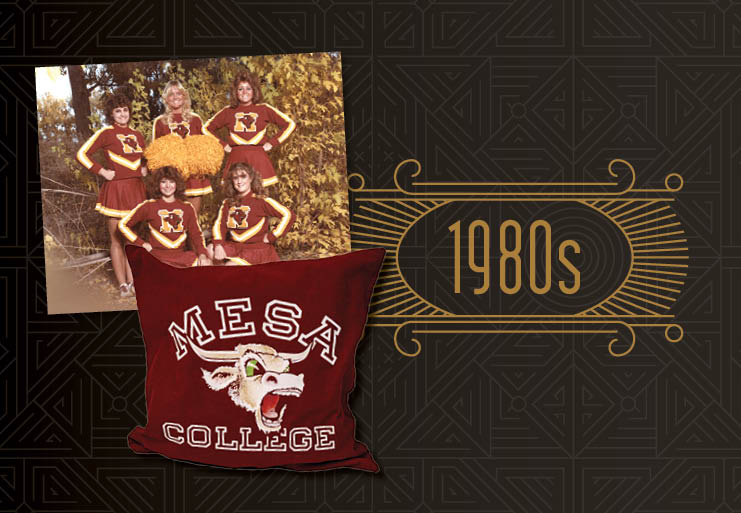
The 1980s became a defining decade for vocational and technical education at Mesa College. As industries across Colorado began embracing advanced machinery and computer-based technologies, the demand for a highly skilled workforce surged. It was during this time that the college — with Youngblood at the forefront — solidified its commitment to ensuring vocational education remained a central pillar of its mission.
In January 1982, that vision took shape with the opening of the Industrial Energy Training Center. The new facility housed welding and diesel mechanics programs, while electric lineworker and agricultural programs shared the same property. The addition of this dedicated training center reinforced the college’s promise to its faculty, students and the community to continue offering accessible, high-quality technical and vocational training that served learners of all ages and backgrounds.
Throughout the decade, faculty, policymakers and community members worked closely to align curriculum with industry needs. Their efforts culminated in legislation to create the Tilman N. Bishop Unified Technical Education Campus (UTEC), which opened its doors in 1992 after a decade of planning and unification through the 1980s.
Evolution Throughout the Decades
In 2008, Youngblood was honored as the namesake of one of CMU Tech’s buildings, cementing his impact in shaping the course of education at CMU.
At the surprise naming event, former Trustee Glen Gallegos commented on Youngblood’s impact.
“He was years ahead of his time. He broke the scheme that you were only somebody if you had a four-year degree.”
Technical education at CMU has continually evolved to reflect the needs of each generation. Business students once mastered typewriters and filing systems. Today, they learn to navigate digital platforms and artificial intelligence tools that drive modern industries.
Another cornerstone of CMU Tech’s growth has been the Culinary Arts program. Launched in 1998 with just six students in the Chez Lena dining room, it has since expanded to serve more than 100 students each year.
The program blends hands-on training with business and hospitality education, preparing students for a wide range of culinary careers.
During the years, UTEC became Western Colorado Community College (WCCC) and was later renamed CMU Tech in 2023. Through every name change, its mission remained constant: to meet students where they are and prepare them for meaningful careers that positively impact the community.
Certificates and Degrees Abounding
Today, CMU Tech offers more than 30 programs, ranging from auto mechanics and agriculture to law enforcement and childcare — each offering practical training that leads directly to employment.
One of CMU Tech’s most impactful contributions to the local community is in healthcare education. The Mesa County Economic Update, released in January 2025, highlighted the significant role healthcare services play in the local economy, supporting more than 12,500 jobs.
The programs help students enter this growing field with certificates and degrees in areas like Medical Office Assisting, Nursing Aide, Pharmacy Technology, Emergency Medical Services (EMS) and Gerontology.
Between 2022 and 2024, the Nurse Aide program experienced record growth, awarding more than 70 additional certificates.
Experiences like Live Scenario Day also give EMS students the chance to apply classroom lessons in realistic, hands-on situations, simulating injuries and emergencies while collaborating with local hospitals and emergency medical teams.
“The students feel more prepared and it helps them realize they’re capable of being in this line of work,” said Allied Health and Paramedic Program Director Pam Holder.
Career Opportunities
Certificates and associate degrees from CMU Tech often lead to immediate job placement. Nationally, about 75 percent of technical school graduates find jobs within six months and CMU Tech students follow that trend — whether launching their own businesses or joining local companies.
Isaiah Solomon, a recent CMU Tech graduate, is a prime example of how hands-on learning can create direct career opportunities. As the eldest of six children, he helped his single mother raise his siblings. College wasn’t immediately within reach, but encouragement from his high school football coach, along with financial aid, opened the door.
Having been interested in auto mechanics since age 13, Solomon enrolled in the Transportation Services program at CMU Tech. While in college, he transformed classroom knowledge into a business: Jr. Mobile Mechanics, which offers on-site auto repair as a convenient alternative to traditional shops.
Solomon’s success reflects the ongoing legacy of CMU Tech’s vocational programs, combining technical skill, entrepreneurial spirit and community service.
Continued Impact from the 1980s
Thanks to voices like Wubben and Youngblood, CMU Tech and vocational and technical education has remained a key pillar of today’s institution.
Without CMU Tech graduates, the Grand Valley and its community may not have the hardworking, skilled professionals it has today. By building careers close to home, they’re serving neighbors, strengthening industries and fueling the economic vitality of our community.