
A Born Community Leader
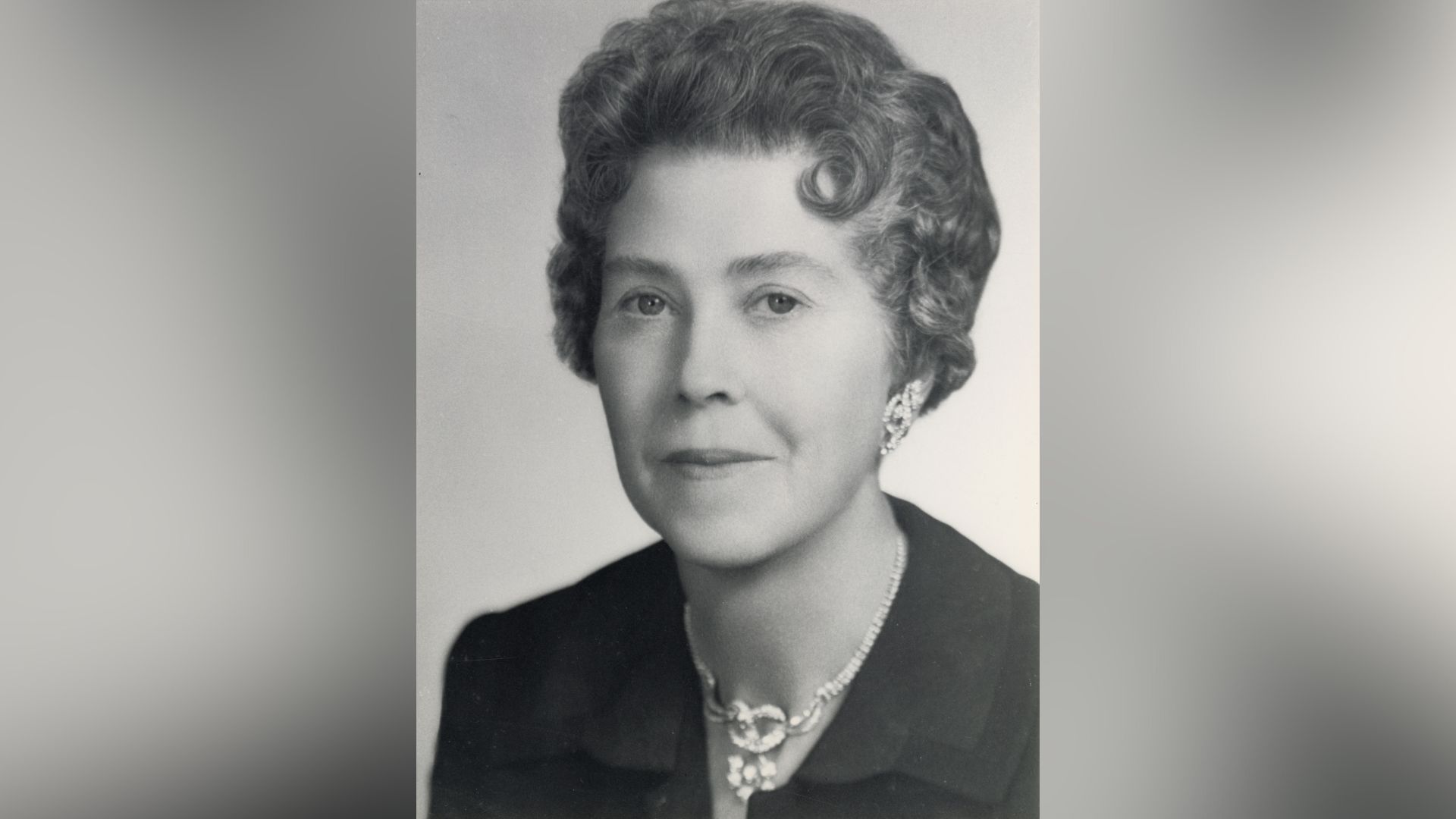
When Josephine Ramsay arrived in Grand Junction in November 1920, she was traveling the state as a representative of the Young Women’s Christian Association (YWCA), promoting organized activities for girls and young women. World War I was over, and as she explained in an oral history interview from 1980, girls “were getting out of hand with all the boys coming home.”
An Oklahoma native who graduated from Smith College in 1918, Ramsay stayed in Grand Junction for about a month. And while the YWCA never materialized, she met the love of her life, Clyde Biggs, and eventually made Grand Junction her home.
Ambitious, smart, and driven, Biggs was named to the first Mesa College board of governance in 1938. It was 1964 when she finally left the board. During her tenure, Mesa College evolved from a scrappy, seat-of-the-pants institution without consistent funding into a thriving, publicly supported junior college.
In addition to Biggs, J. A. Edling of Appleton, Carl Potter of Collbran, M. L. Dilley of Clifton, and R. H. Penberthy of Grand Junction were tapped by the school district to help steer the college. According to Biggs, in a second oral history recorded in 1983, she and Carl Potter, who had a degree from Colorado A&M (now Colorado State University), were the only college graduates on the board.
“The rest of them were very, very sound,” she explained. “Wise, intelligent people who were educated even though they didn’t have a college degree.”
The lack of opportunity to earn a degree locally was always a driving force behind Mesa College. Biggs recalled a representative of the University of Chicago who spoke in Grand Junction around 1934. An advocate for countywide junior college districts, he outlined their “tremendous potential,” explaining that “a lot of people wanted more than high school, but didn’t care about a full college course,” said Biggs. “Finishing off two years more would give people what they would want and training for a job as well.”
Biggs recalled that new facilities and room for expansion were perennial board priorities. One of the first challenges was securing funding to build Houston Hall, which opened in 1940.
“I went over to Denver and talked with the man we were going to partner with,” she explained. “We didn’t have any record, any financial background. They were taking a real risk to take the bonds at all,” said Biggs.
Funding for a women’s dormitory followed, and Mary Rait Hall opened in 1948.
To make room for expansion, the board approved purchasing land north of the college as it became available and commissioned a master plan that called for future expansion to the west.
As for finding and keeping faculty, Biggs gave all credit to President Wubben.
“It was difficult to get teachers at what we could pay,” she explained.“I think probably Horace’s greatest contribution was his uncanny ability to pick somebody who had never been tried. He just seemed to know whether a person was going to be good or not, even though they hadn’t been tested as a teacher. This was the secret, I think, of the success of the early days,” she said.
When Josephine Biggs died in 1996 at the age of one hundred, The Daily Sentinel called her “one of Grand Junction’s social, intellectual, cultural and moral pillars.” In addition to serving Mesa College for so many years, Biggs helped found many local organizations, including the Girl Scouts, the Art Center, the historical society, and a chapter of the American Association of University Women
A Story 100 Years in the Making
Want to learn more about CMU's history? Pre-sale is live for Colorado Mesa University - A Century of the Maverick Spirit, written by Amber J. D'Ambrosio and Kristen Lummis. The 192-page book chronicles CMU's 100-year journey of growth, resilience and community impact, celebrating the people and moments that shaped our Maverick history.