
A small black object passed from student to student in a Confluence Hall classroom. Some turned it over in their hands while others pulled out their phones for a photo before handing it to the person beside them.
They were holding the first object Chuck Hull ever 3D printed, with its inventor sitting only a few feet away.
Hull invented stereolithography, the first commercial 3D-printing technology, in 1983. But long before his invention helped launch an industry, he grew up in Mesa County and graduated from Mesa College, now Colorado Mesa University, in 1959.
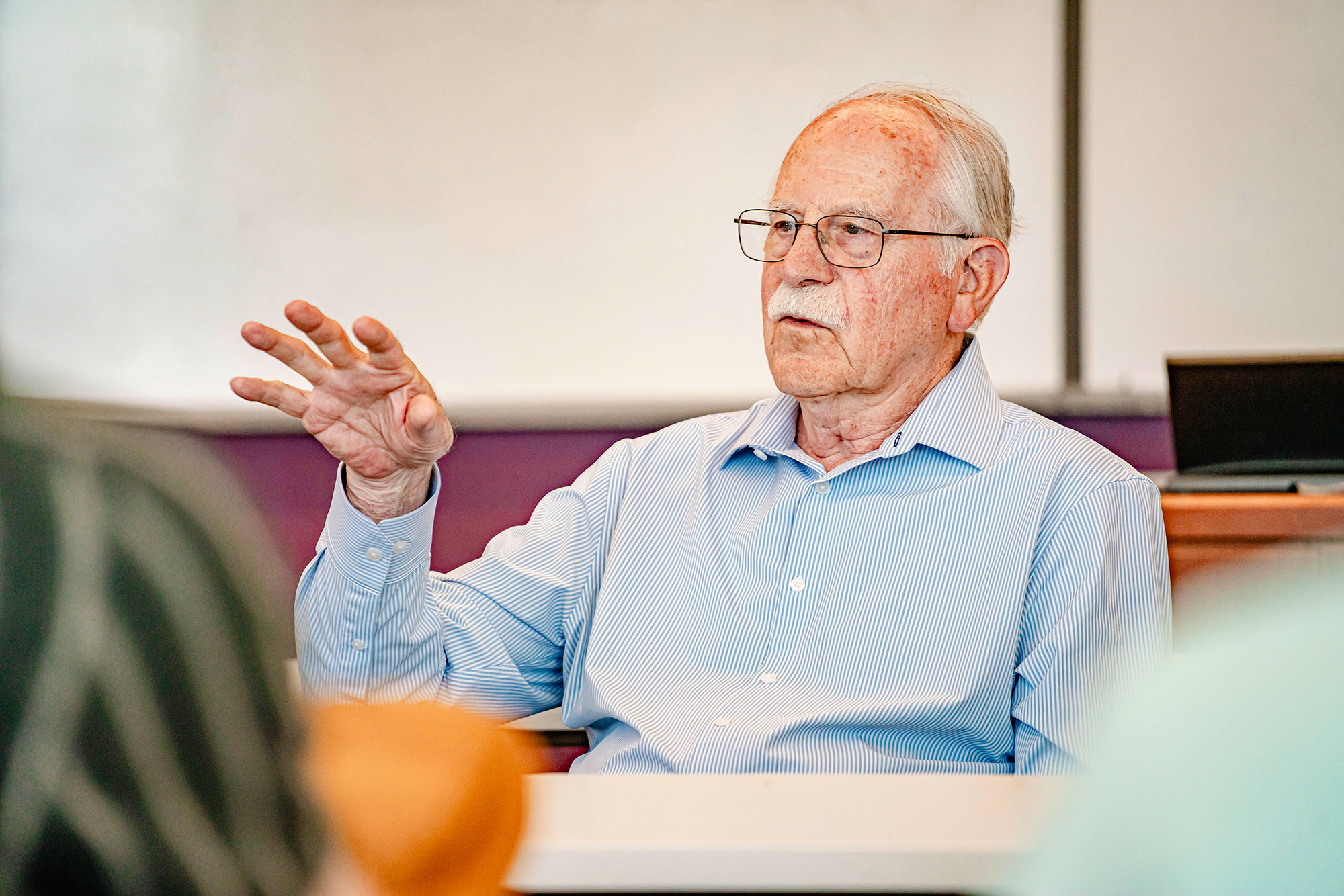
More than six decades later and 12 years after his last visit, Hull was back on campus for a Q&A with engineering and computer science students who use 3D printing in their classes, research and daily lives.
For engineering student Christina Eckerson, who spent the summer interning at Los Alamos National Laboratory working with a group exploring 3D-printed explosives, the visit was a chance to see where a technology she uses today got its start.
“It’s just super cool to see how it all began because now we’re so far into it, and it’s used so much in our class life and our daily life as engineers,” Eckerson said.
The connection felt even closer knowing Hull once attended the same university she now attends.
“It’s like meeting one of the people you always learn about, but actually getting to meet them. Also, the fact that he went to our school, that’s amazing,” Eckerson said.
The visit also reminded Hull of what CMU students were doing with 3D printing the last time he was on campus.
Back in 2014, Associate Professor of Computer Science Karl Castleton and his students built Cogburn, a robot that would participate in the 2015 Defense Advanced Research Projects Agency (DARPA) Robotics Challenge. Several of Cogburn’s components were 3D printed, and Castleton said CMU was one of the few teams in the competition incorporating a significant number of 3D-printed parts into its design at the time.
When Castleton got word that Hull was coming back to campus, he printed and framed a photograph from the 2014 visit showing Hull shaking hands with Cogburn.
Hull recognized it immediately. He hadn’t heard how the project ultimately turned out and was happy to hear updates from Castleton about the competition.
The picture gave Hull a familiar point of reference from his last visit. But the campus around it had changed significantly since 2014, and even more compared to the handful of buildings he remembers from his time as a student.
“My first impression was, 'I don’t recognize anything',” Hull said.
The way CMU students are using 3D printing has changed, too. When Hull last visited, students were already putting the technology to work through projects like Cogburn. Now, students also have a dedicated 3D Printing Club, advised by Castleton, where they use it for projects across disciplines.
“All of us have printers at our houses,” said 3D Printing Club member Calvin Hazard. “We end up doing a lot of support for other classes.”
That work has included collaborating with the art department on projects like creating a campus statue of former CMU instructor and vice president Mary Rait. Much like the club’s work, the collaboration reflected a point Hull emphasized during the Q&A.
“The more interaction you have with people with different backgrounds, the more innovation occurs,” Hull said.
Hull is still putting that idea into practice today. He co-founded 3D Systems in 1986 and now leads a team working with United Therapeutics to develop full-size, vascularized human lung scaffolds, with the long-term goal of creating lungs for transplantation.
Hull talked with students about the project and the range of expertise needed to make work like it possible.
“In my case with the lung, it’s interacting with pharmaceutical people, super-talented biologists, tissue engineers and so forth,” Hull said. “I don’t have the experience there. You interact with them, and these ideas happen.”
While Hull continues looking ahead, others are working to document the story of how it all began. Hull Legacy Media has completed a documentary about his life and the evolution of 3D printing, with plans for a future screening at CMU’s Asteria Theatre. A memoir about Hull’s life and career by author and storyteller Wayne Drash has also been completed and is awaiting publication.
Even with those projects looking back at his career, Hull’s own sights are set on the future.
“My philosophy, or my disposition, is I always look forward,” Hull said. “Seeing the forward possibilities, you feel then that you have to participate and have to help make that happen.”
That outlook also shapes what Hull sees when he looks at CMU students beginning their own engineering careers. He called their enthusiasm for 3D printing “humbling.”
“Just the excitement of becoming an engineer,” Hull said. “Our whole society really depends on what engineers have developed. So when you see the engineers here just getting ready to launch, it’s very exciting.”
-
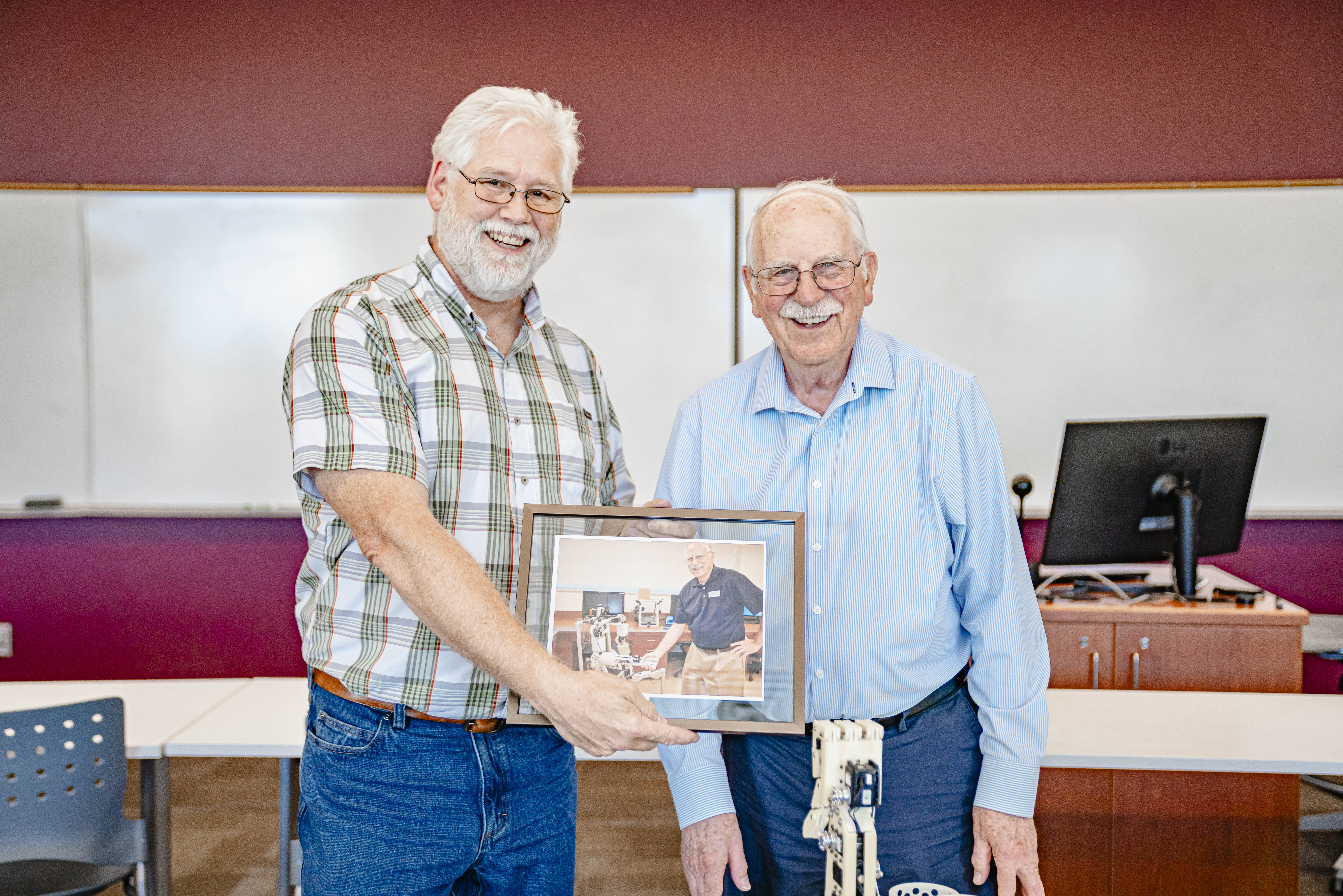
Associate Professor of Computer Science Karl Castleton and Chuck Hull hold a framed photo from Hull’s previous campus visit.
-
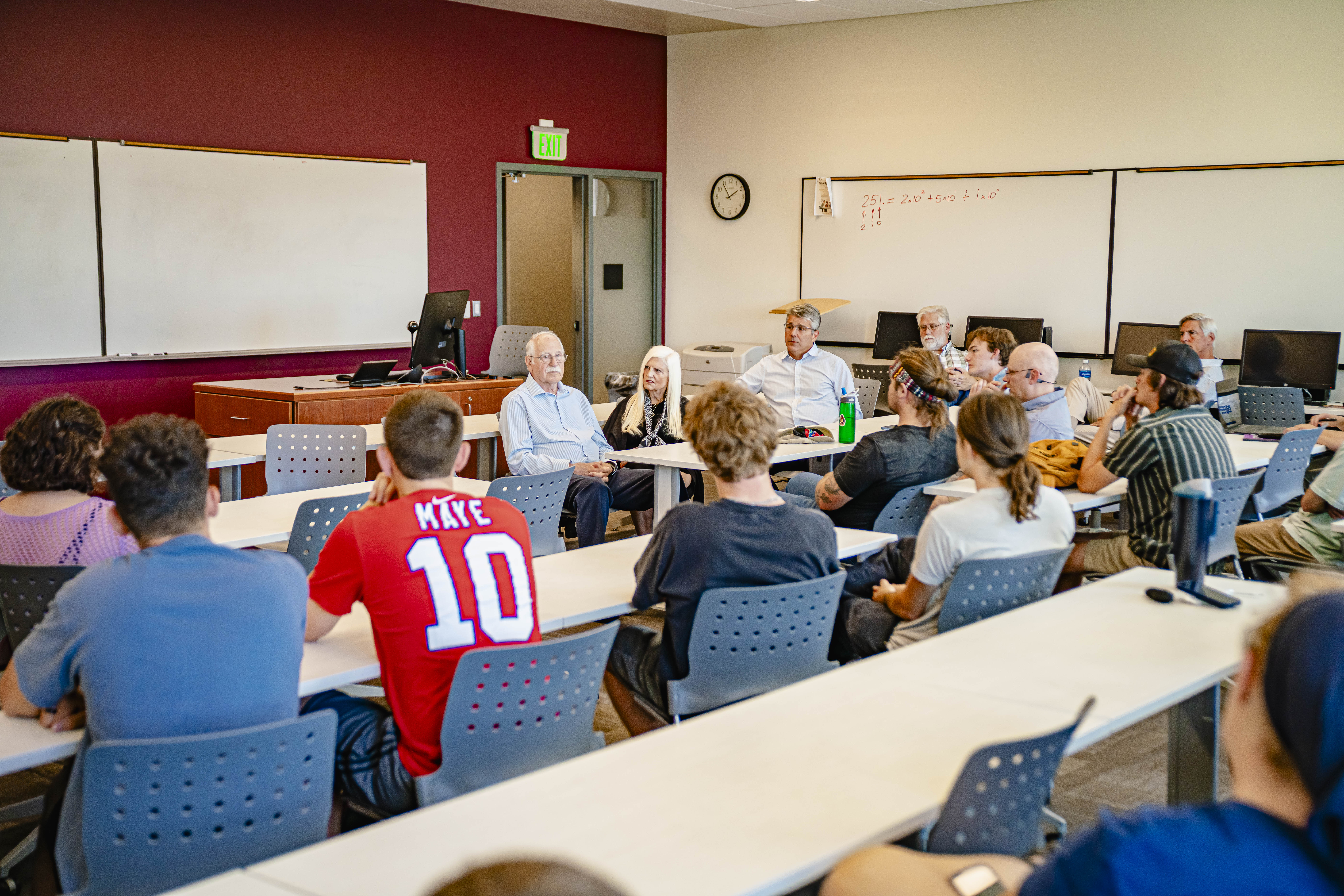
Chuck Hull and his wife, Anntionette, speak with students during the Q&A.
-
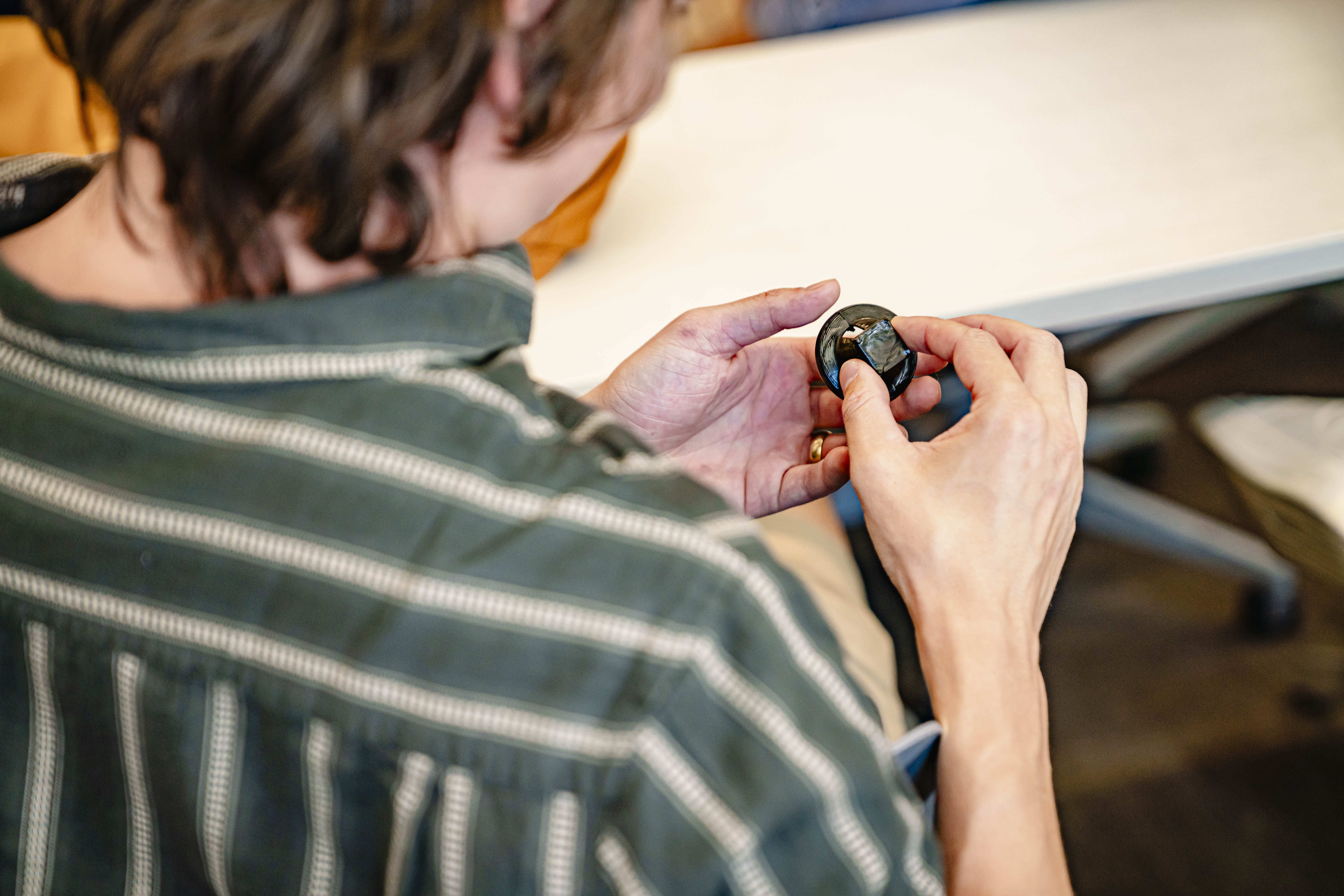
A student holds the first object Chuck Hull ever 3D printed.
-

Chuck and Anntionette Hull.
-
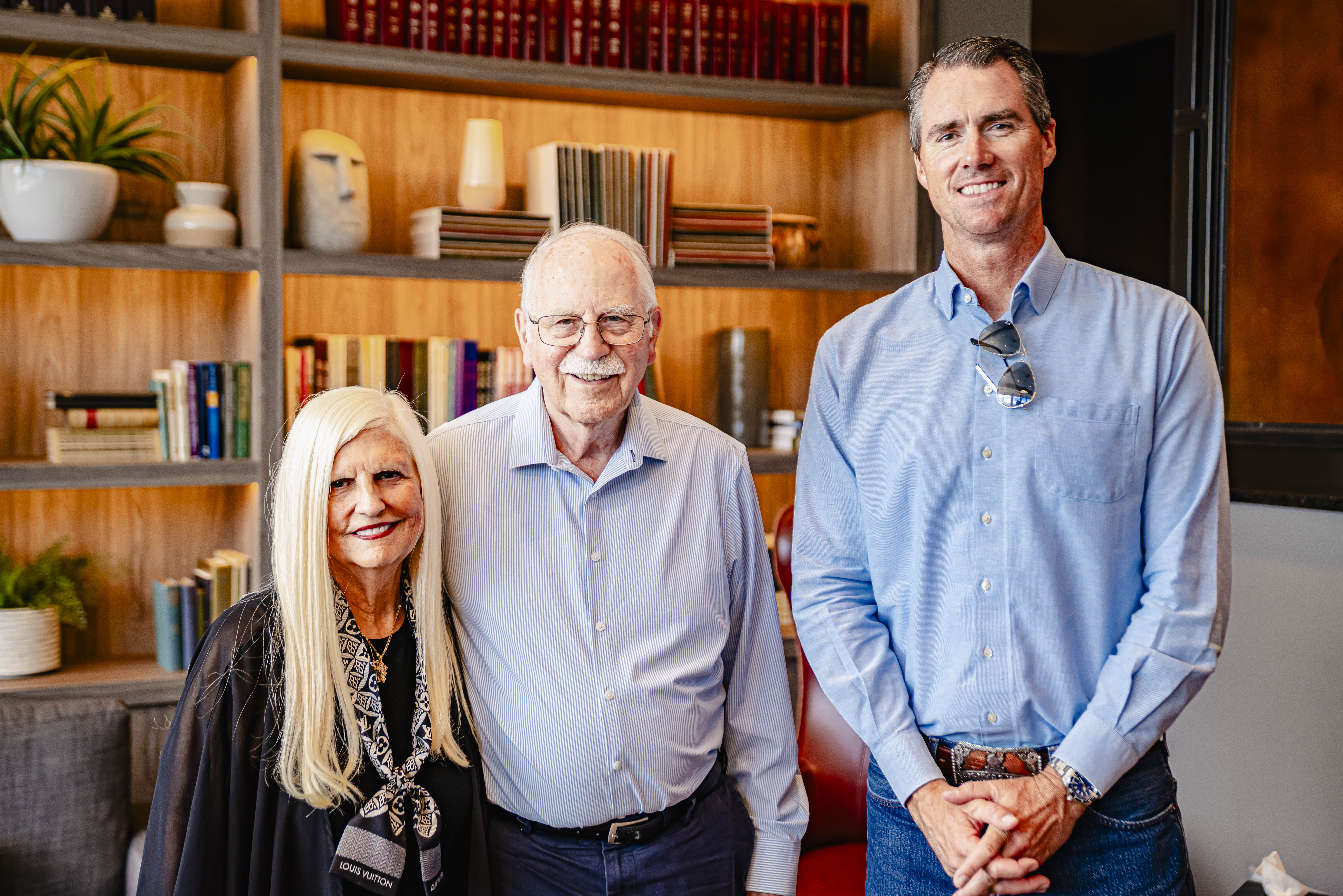
Chuck and Anntionette Hull with CMU President John Marshall.
-
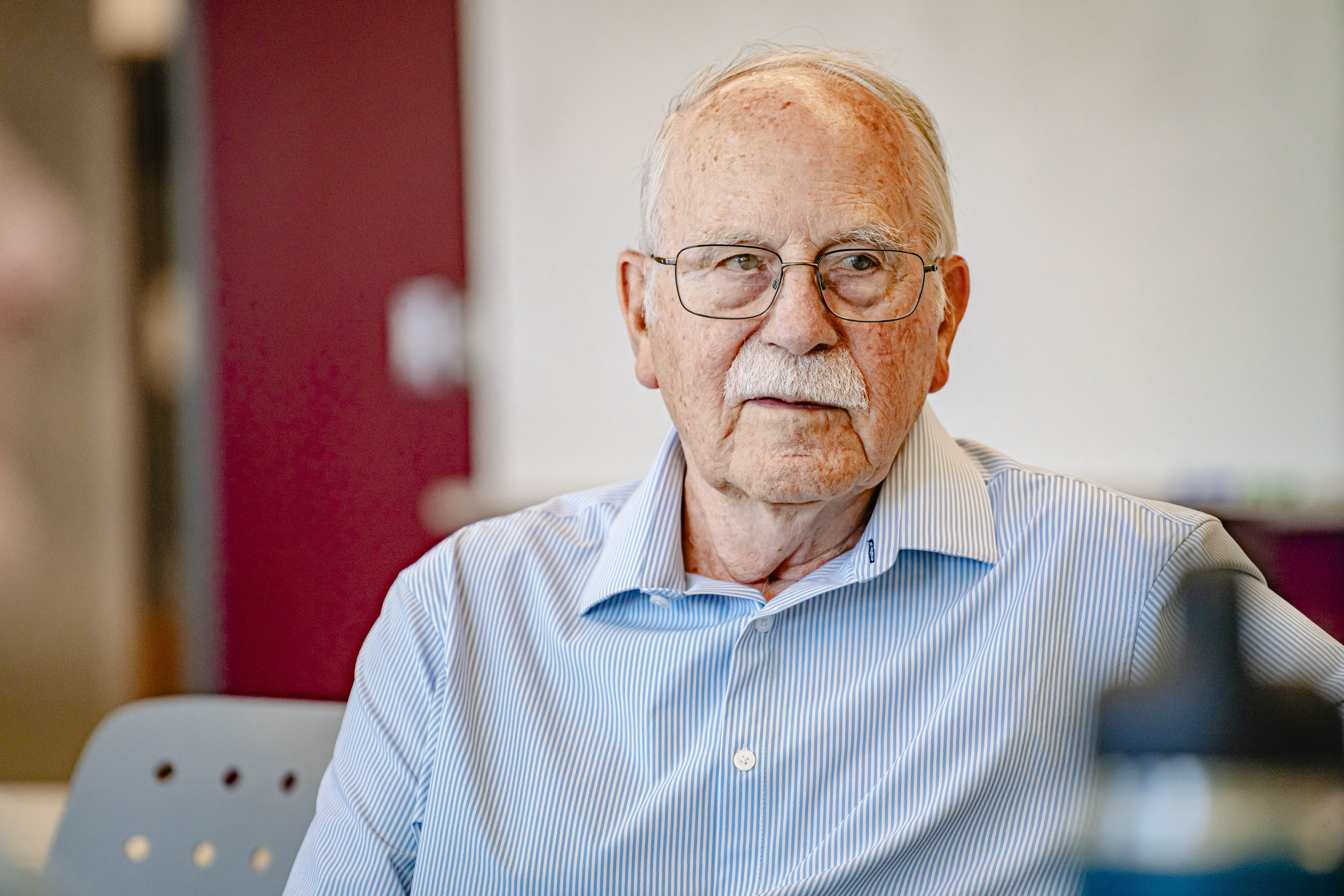
Chuck Hull visits CMU and participates in a Q&A with computer science and engineering students.