
On the Rise: Consent and Body Autonomy in Children’s Picture Books
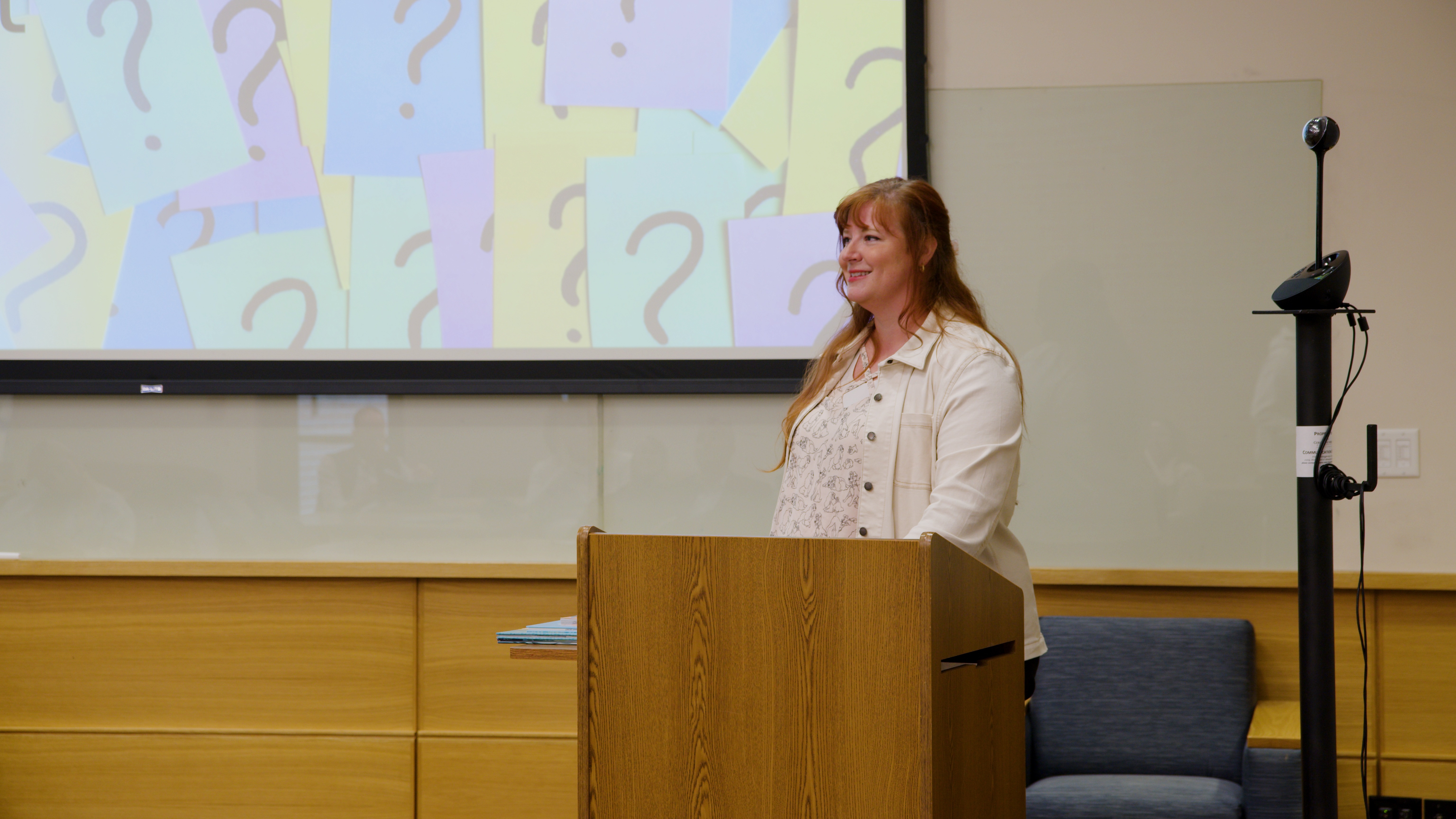
Children’s picture books may look simple, but many are tackling some of the most complex and important conversations about consent, personal boundaries and body autonomy. At the second Faculty Colloquium of the spring 2026 series, CMU Visiting Instructor of English Megan Riddle explored how these books help children develop the language and confidence to express their boundaries and understand the concept of consent.
Riddle, now in her second year at CMU, became interested in the topic while considering how the messages children receive through literature shape their understanding of personal safety and bodily autonomy. She emphasized that caregivers, educators and community members all play a role in helping children learn what consent and personal boundaries look like in everyday interactions, but children’s books can provide an accessible starting point for these conversations.
“Your sphere of influence is limitless,” Riddle said. “We want to protect children, but there are many people who are not talking to children about these topics, which does not help them. As educators, we have to walk into a room knowing there are children who are experiencing or recovering from abuse.”
Conversations about these topics remain limited in many households. Riddle pointed to a 2021 study that found only 64% of surveyed parents in the United States had discussed sexual abuse with their children.
While “stranger danger” messaging became common, conversations about consent and body autonomy have received far less attention in earlier decades. Books in the 1980s began addressing sexual abuse directly, but by the 1990s many shifted responsibility onto children to avoid danger — an approach Riddle views as problematic. By the 2000s and 2010s, however, publications increasingly focused on helping children recognize boundaries and understand that they have control over their own bodies.
Riddle highlighted several contemporary picture books that model these concepts in accessible ways, including Will Ladybug Hug?, which introduces children to the idea that people have different preferences for physical affection. These stories give caregivers a gentle starting point for conversations about boundaries and can help children who struggle to articulate discomfort with physical interactions.
“These books give children autonomy and power,” Riddle said. “So many decisions are made for children, but these books give caregivers a chance to see how children think about these interactions and to accept that when children say they don’t like something, that’s okay.”
Despite the growing number of books available, Riddle noted that access to these resources remains a challenge. Many titles are difficult to find in large retail stores, and some books have been challenged or targeted for removal by pressure groups.
“Libraries are saving the world,” Riddle said, noting that public libraries often provide the most reliable access to these materials. “Sometimes, it’s like playing hide and seek and never finding any – unless you go to the library.”
Riddle encouraged caregivers and educators to take initiative by sharing books within their communities, placing them in waiting rooms or recommending them on social media — small efforts that can help put these resources into the hands of children and families.
“Think of the ways in which you interact with children,” Riddle said. “Meaningful change often begins locally. Your sphere of influence is bigger than you think.”
For Riddle, expanding access to these types of children’s books is a practical way communities can help children develop the language and confidence to express their boundaries. In doing so, they become more than stories — they become tools that help children understand their bodies and recognize their right to personal safety.


The Faculty Colloquia Series provides an opportunity for CMU faculty members to share their research interests, scholarly work and creative endeavors with colleagues across campus.
“The Faculty Colloquium Series is an awesome opportunity that exists for our faculty members to showcase some of their scholarly and creative activities and interests. I’m always amazed by the breadth and depth of the knowledge and expertise of our faculty," said Assistant Vice President for Academic Affairs for Faculty Success Chad Middleton, PhD.
The final presentation of the Spring 2026 series will take place next month.
Presenter: Associate Professor of Sociology Stephen Merino, PhD
Title: On Race and College Sports
Date: Monday, April 6, 2026
Time: 11 am–12 pm
Location: Center for Teaching and Learning
Faculty and staff are encouraged to attend and engage with the research and expertise of their colleagues across campus.