
Taking Stock: Ranching Women of Colorado
When Assistant Professor of Mass Communication Laurena Davis reviewed records from a nursing home where her grandmother once lived, one line caught her attention.
Under “occupation,” the form listed her grandmother as "housewife." What it didn’t mention was the decades she spent helping run a sheep ranch. For Davis — whose family roots include generations of ranchers — the omission made her wonder how many other women’s stories have gone undocumented in the world of ranching.
That question became the starting point for an oral history project Davis shared during the recent Faculty Colloquium hosted by CMU’s Center for Teaching and Learning.
The project, titled Taking Stock: Ranching Women of Colorado, brought about a collaboration with Instructor of Mass Communication Greg Mikolai, mass communication student Wylee Mitchell and other CMU students and alumni to document the experiences of women working in agriculture across western Colorado.
From July 2024 to July 2025, the team traveled to ranches in communities like Hotchkiss, Paonia, Fruita, Ridgway, Basalt and more, recording interviews, capturing photographs and documenting daily ranch life.
The work was supported by a $28,000 Archie Green Fellowship grant from the U.S. Library of Congress. The grant funded travel expenses, photography equipment and support for four CMU student interns.
The team conducted interviews with 12 women involved in ranching. Some come from multigenerational ranching families whose operations have endured fluctuating markets, wildfires and other economic pressures. Others represent a newer generation of ranchers experimenting with sustainable approaches and new business models. Their stories represented the many ways women help keep ranches running across western Colorado while continuing to influence the future of agriculture in the region.
The project also provided CMU students with hands-on experience. Students like Mitchell assisted Mikolai with filming interviews, capturing drone footage and documenting ranch work in the field while helping produce documentary-style footage to accompany the oral histories.
To meet the Library of Congress’s standards for archival collections, each interview was recorded with high-quality audio. The team also documented ranch life, capturing footage that will support both short-form and long-form documentary projects now in development.
So far, more than 200 digital files have been cataloged as part of the project. The materials will eventually become part of the Library of Congress American Folklife Center’s Occupational Folklife Project, a national archive dedicated to preserving the stories and traditions of workers across the United States.
Once the collection becomes publicly accessible, researchers, historians and community members will be able to explore interviews, photographs and video recordings that document the people and traditions shaping ranching across western Colorado.
For Davis, the project means the work and experiences of these women will now be documented for future generations to learn from.
-
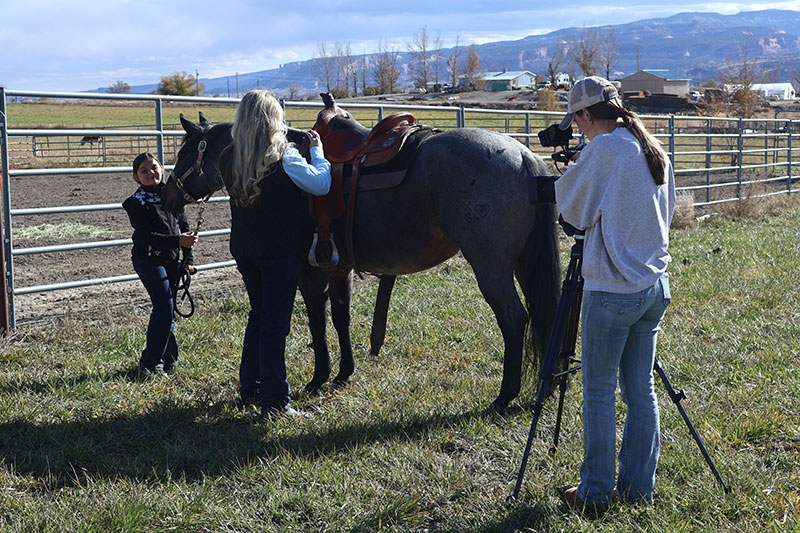
CMU Communications Studies Instructor Tara Carleo raises performance quarter horses at the XS Heart Ranch West Division. She is pictured here with her daughter, Lena, who is holding the horse, and is being filmed by CMU student Jordan Neifert. Photo credit: Laurena Davis.
-
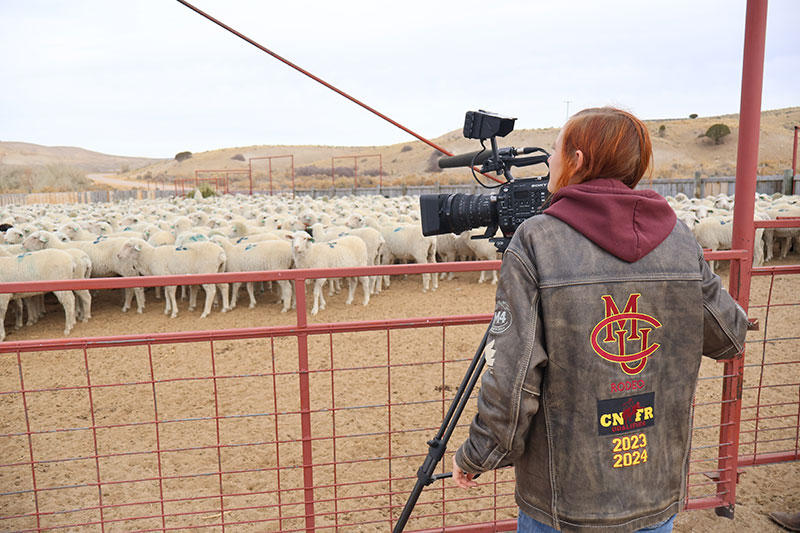
CMU student Wylee Mitchell films sheep at Two Bar Ranch in Maybell. Photo credit: Laurena Davis.
-
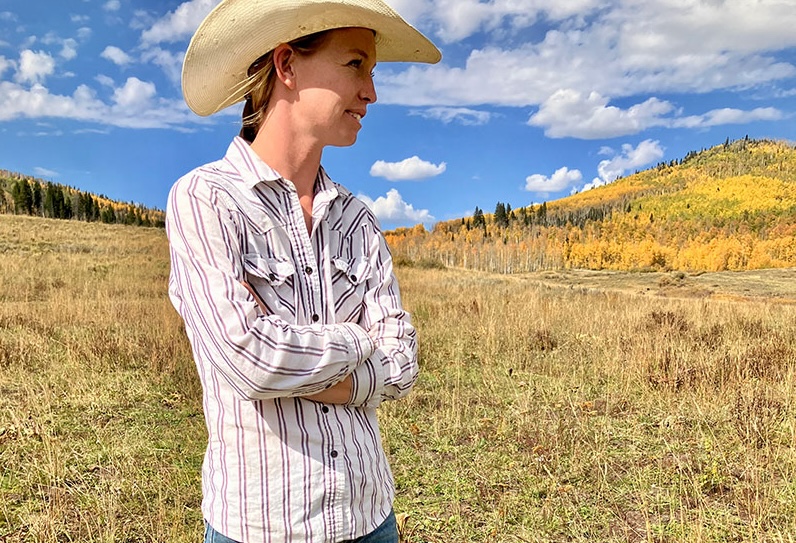
Ce'rra Westerman of Carsten Simmentals is a CMU alum. She was photographed in September, 2024, in Hubbard Park, outside of Paonia. Photo credit: Laurena Davis.