
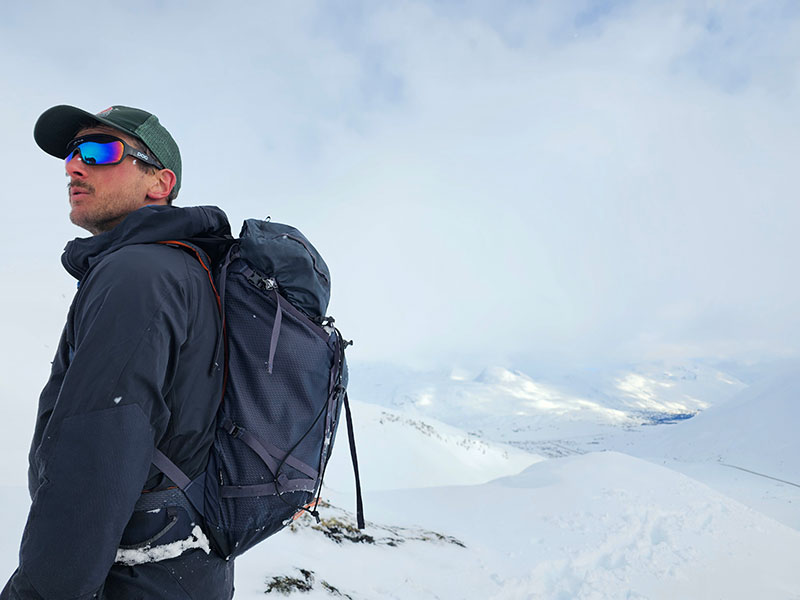
Adam Bavier brought years of experience to his talk at the latest Monfort Family Human Performance Lab Speaker Series
Fresh snow can make the mountains feel irresistible in a place like western Colorado, where a bluebird day and untouched terrain are often enough to get locals outside and into the backcountry. Adam Bavier has spent much of his career helping people move through those environments safely, teaching risk management and showing students that in winter terrain, good judgment matters just as much as excitement.
Bavier is an instructor of outdoor recreation industry studies at Colorado Mesa University, where he teaches outdoor leadership, technical skills and risk management. His background includes guiding and field education in places like Yellowstone and Mount Rainier, where changing conditions and careful decision-making are part of daily travel.
Bavier’s talk, “Avalanche Awareness: Science, Safety and Decision Making in Alpine Terrain,” introduced attendees to the basics of avalanche conditions and how to make smarter decisions in snowy weather.
“Avalanches only occur under specific knowable conditions. One of them is the terrain, and that's something that we can control,” Bavier said. “We can't control the weather, we can't control the snowpack, but we can control what terrain we choose to go into. We need to have an understanding of that and keep ourselves within a wide margin from avalanche terrain as beginners.”
He also spent time on the early learning curve of backcountry travel. Beginner mistakes are often less about dramatic failures and more about the small parts of getting started, like unfamiliar gear, deep snow and the realization that travel outside a resort is usually slower and harder than people expect.
That can mean becoming familiar with the equipment, learning to move efficiently through snow, or realizing the day may not look anything like what you imagined beforehand. Bavier encouraged attendees not to let that disconnect define the experience. A good day outside doesn’t have to involve steep terrain or perfect powder. Sometimes it means getting out, learning something and coming back more comfortable than the day before.
Another part of the conversation centered on teamwork. Backcountry travel, especially in avalanche terrain, depends on the people around you. That means clear communication, honest conversations and the ability to make decisions together.
“Avalanche hazard, in particular, is a team sport. We don’t do it by ourselves,” Bavier said.
He spoke about the importance of being realistic with partners, whether that means discussing risk tolerance, setting goals that fit the group, or knowing when to back off a plan.
“Developing team skills, communicating clearly, setting realistic goals and working toward them, being honest about your own risk tolerance and learning how to calibrate it with someone else, those are the skills true professionals have,” he said.
As western Colorado moves through another snow season, Bavier’s talk emphasized that preparation matters. For students and community members in attendance, the lecture reinforced that in avalanche terrain, good judgment and teamwork are just as important as technical skill.
The next presentation in the Monfort Family Human Performance Lab Speaker Series will take place later this month. Students, faculty, staff and community members are encouraged to attend and learn more about fall risk and prevention strategies for older adults on the Western Slope.
Title: The Hidden Epidemic: Prevalence of Falls and Innovations in Fall Prevention
Presenters: Autumne Hollingsworth, Cassidy Herringer and Amy Hammerich
Date: Tuesday, April 28, 2026
Time: 6-7 pm
Location: Colorado Mesa University, Maverick Center, Room 155