
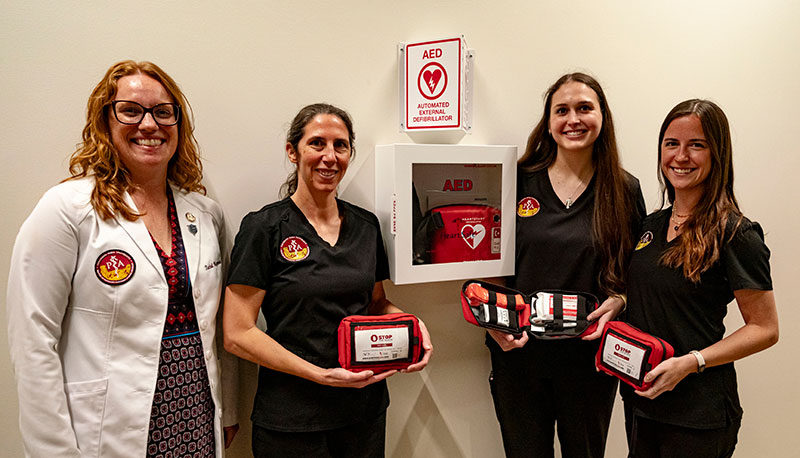
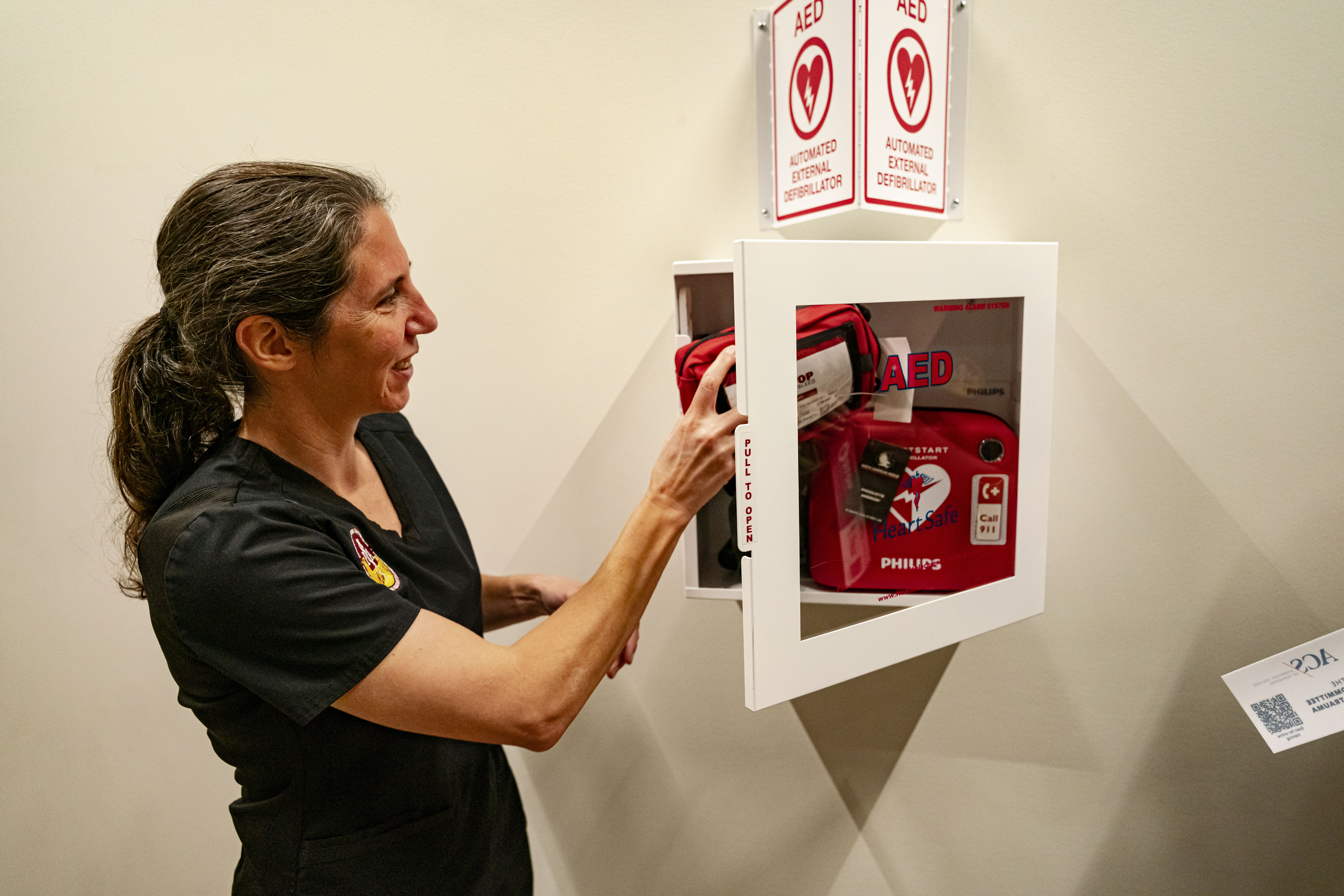
Physician Assistant (PA) students at Colorado Mesa University have launched a campus-wide safety initiative, beginning with the installation of the university’s first Stop the Bleed kit in the St. Mary’s Education Center. The kit is the first of 44 that will be paired with every existing AED on campus as part of a capstone project led by PA students Alicia Ford, Ella Overfield Lamberti and Sierra Anthony. Together, the kits create a station of resources that enable anyone to act in an emergency.
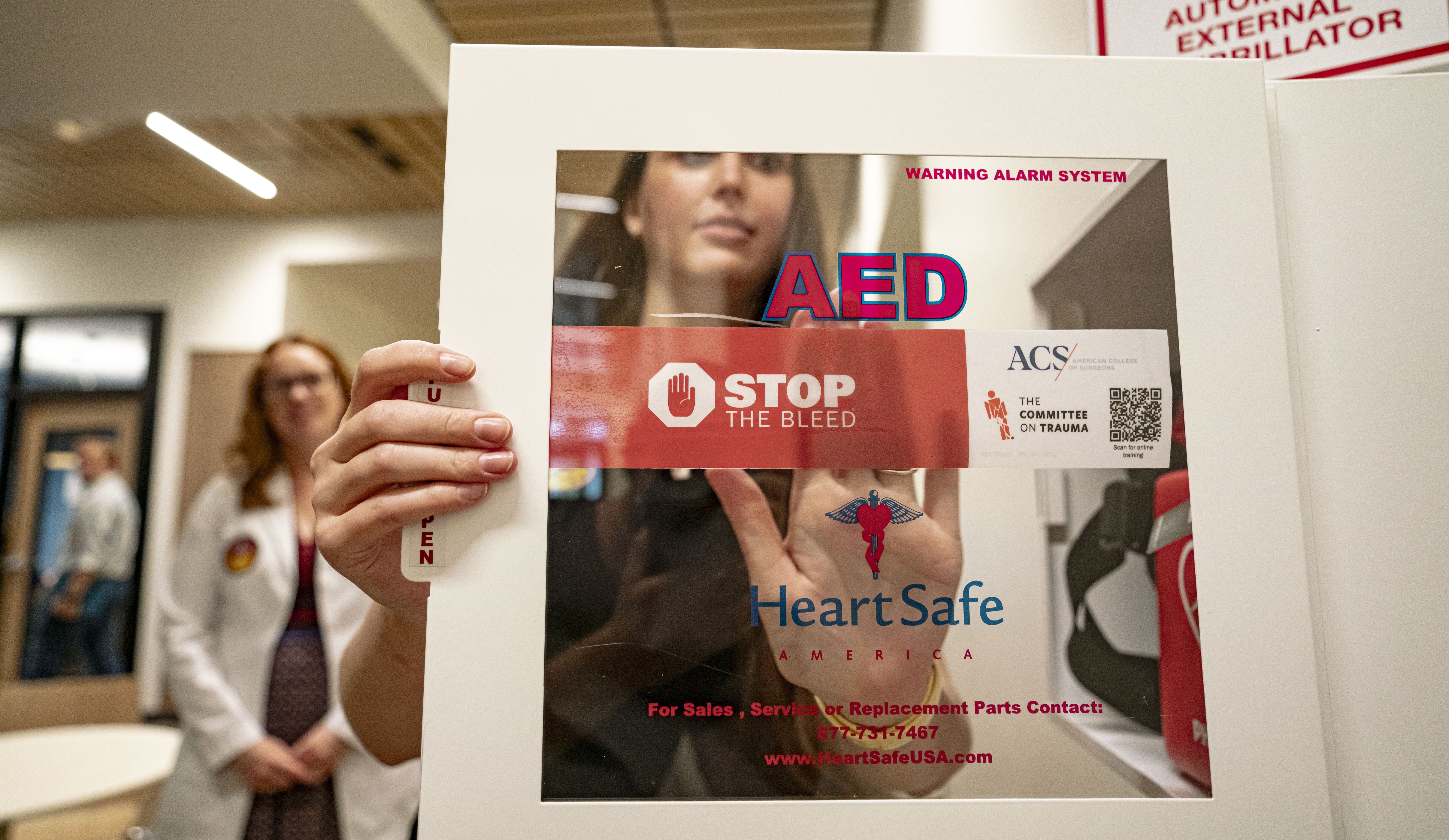
Stop the Bleed is a nationwide program created by the American College of Surgeons to teach the public how to respond to life-threatening bleeding. Each kit is a small red bag stocked with supplies, including a tourniquet, dressings, gloves, and scissors, all designed to control severe bleeding until medical professionals arrive.
“Hemorrhagic bleeding is the number one cause of preventable death in trauma situations. We want the campus to feel brave enough and capable enough to step in and potentially save a life,” said Overfield Lamberti.
The idea for campus-wide kits originated from a PA student with military experience in a previous semester. Ford, Overfield Lamberti and Anthony expanded that idea into their capstone project, collaborating with faculty and CMU facilities staff to bring it to life.
“We wanted to try and give back to CMU in our own way,” Ford said. “This was a good way to make a real difference.”
To make the initiative possible, the students met with administration to secure approval and worked with Atlas, CMU’s facilities partner, to determine AED locations. They then raised funds to purchase a kit for each of the 44 AEDs.
“We chose to place the kits with AEDs because that’s already a known location where people go in an emergency,” Anthony said. “It makes it easier to grab everything you need in one spot.”
The students also chose reusable bags, allowing individual components to be replaced if used. Materials in the kit don’t expire, making the kits a long-term investment in campus safety.
“It sounds like this very scary, complex medical thing you have to do, but anyone can use these kits with pretty minimal training,” Anthony added. “It’s similar to how AEDs seemed intimidating at first, but now people know they’re designed for the public to use.”
To further increase accessibility, each kit will also have a sticker with a QR code that links to step-by-step instructions for responding to bleeding in critical moments.
“I’m proud of the way they used their skills to give back to campus and help others feel safe,” said Rachel Weinzimmer, DMSc, PA-C, who serves as an Assistant Professor of Physician Assistant Studies, Assistant Director of the PA program, and Director of Didactic Education. “Now we have a resource that empowers others to act in a critical moment.”
For more information about Stop the Bleed and available training, visit StopTheBleed.org.