
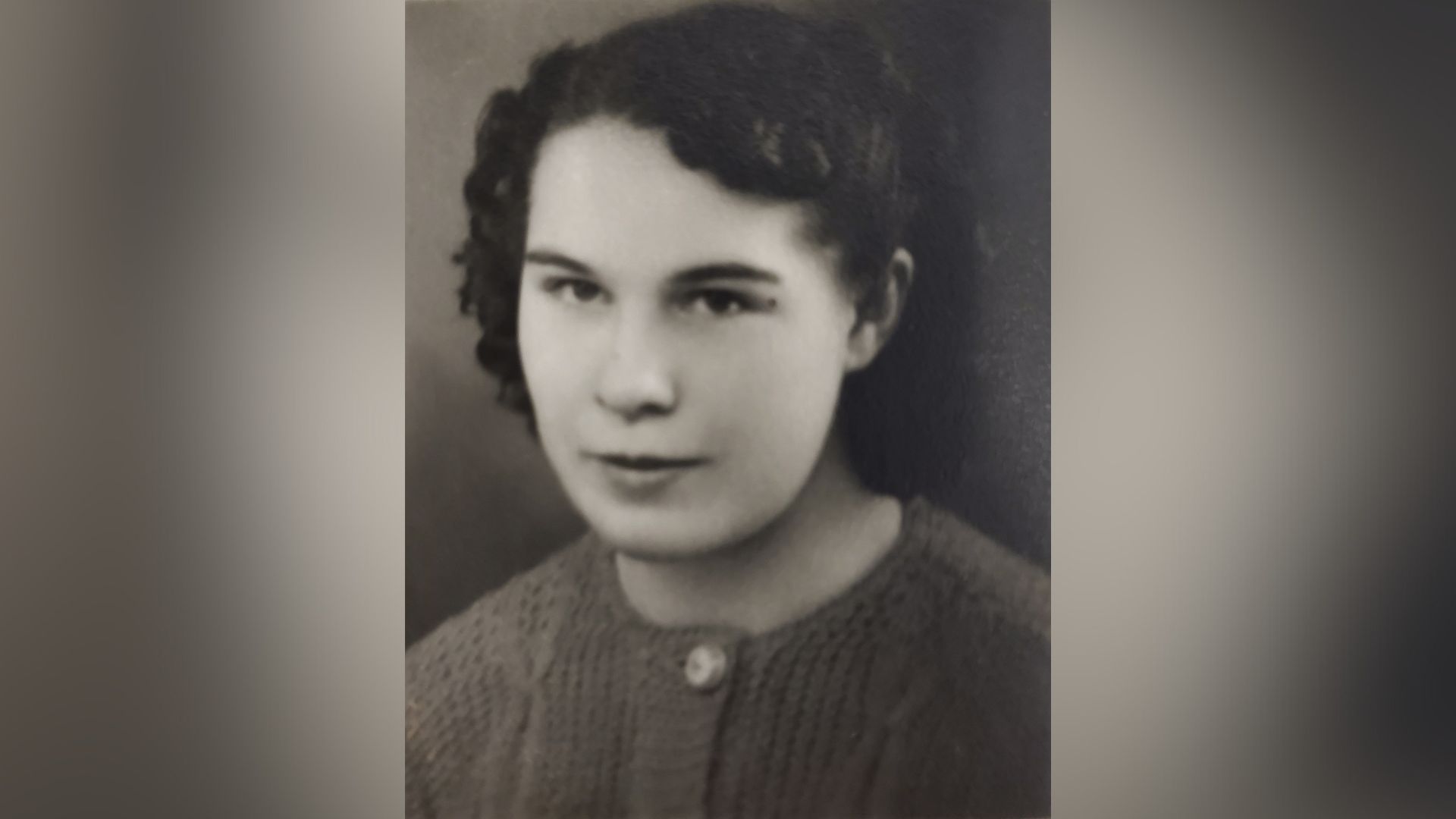
Mesa College During Wartime
World War II shaped the college experience of Dorothy Jean Robbins. A 1943 graduate of Fruita Union High School, Robbins earned an associate’s degree in education from Mesa College before transferring to the University of Northern Colorado. She taught for many years in Northern California before returning to the Grand Valley after retirement. Robbins passed away in November 2019 at 94 years of age.
Dorothy Jean Robbins recalled the war years and her time at Mesa College in a 1993 oral history interview conducted by Mesa State College student Lydia L. Herron for an Introduction to Public History class. While many of the interview questions focused on general student life and education, many of the answers inevitably turned back to the war.
War shaped all aspects of life at that time. When asked about popular music, Robbins recalled seeing bands at Elitch Gardens the summer between high school and college when she lived in Denver with an aunt and worked at the US Army’s Denver Medical Depot as a clerk. She said that her aunt would invite soldiers and sailors who were away from home to dinner. “Everyone felt it was our duty,” she added. We were emotionally for the war. We felt so strongly that we were the ones who were attacked.”
During high school, Robbins witnessed dwindling numbers of young men, as many were enlisting as soon as they were able. At Mesa College, she was struck by the lack of male students, save for “some 4Fers,” the term for being physically unfit, and a group of airmen who wore uniforms on campus, took their own classes, and mixed with other students only when stopping by an on-campus store “for a coke and candy.” Although she didn’t know it, Mesa College had started a Civil Aeronautics Authority War Training Service Program.
Students at Mesa contributed by collecting “toothpaste and other things, paperback books, and candy,” recalled Robbins. “These were organized at the college and sent to GIs and POWs.” After the war, a friend who had been a prisoner of war at Stalag Luft 1 in Germany confided that the packages never arrived. Robbins suspected that the Germans simply opened them and took the goods for their own use.
Rationing and ration books were commonplace during WWII. Sugar, shoes, coffee, and cigarettes were some of the items Robbins remembers being in short supply, although she doesn’t recall any shortage of textbooks.
Weekends and summer were for working and earning money. Robbins worked at a creamery, at a drug company, and at a canning factory. The canning job was notable because, with so many men away at war, there were labor shortages. The Grand Valley had POW camps in Fruita, Lincoln Park, and Palisade, according to a 1979 article in The Colorado Magazine. The Daily Sentinel, reporting from this time, shares that the POWs were largely utilized in agricultural roles. On September 10, 1944, the newspaper wrote that 225 POWs were working, with a hundred icing cars for each shipment, thirty employed in the canning factory, and ninety-five picking fruit in the orchards. Robbins recalled the POWs “were young people like anyone else, but they wore a coverall uniform and mostly worked outside. We didn’t talk to them,” she explained.
Robbins shared that students kept tabs on the war, hearing about progress and “hoping that everything would go alright.” She was on campus when President Franklin Delano Roosevelt died on April 12, 1945, and said there was “a real feeling of sadness. It was a shock to think your president had died.”
Summing things up, Robbins noted that many people felt that “it was ambiguous if the US would win. It’s not over, ‘til it’s over. But once the atomic bomb was dropped, you knew. We got the message that they were giving up.”
A Story 100 Years in the Making
Want to learn more about CMU's history? Purchase Colorado Mesa University - A Century of the Maverick Spirit, written by Amber J. D'Ambrosio and Kristen Lummis. The 192-page book chronicles CMU's 100-year journey of growth, resilience, and community impact, celebrating the people and moments that shaped our Maverick history.
CMU's Century Project honors one hundred years of Colorado Mesa University's rich history - celebrating the people, milestones and spirit that have shaped our enduring legacy. As we reflect on this meaningful milestone, proceeds from the commemorative Century Book and events throughout the year will benefit the Century Scholarship, ensuring that future generations of CMU students can continue to grow, learn and carry the CMU legacy forward.