
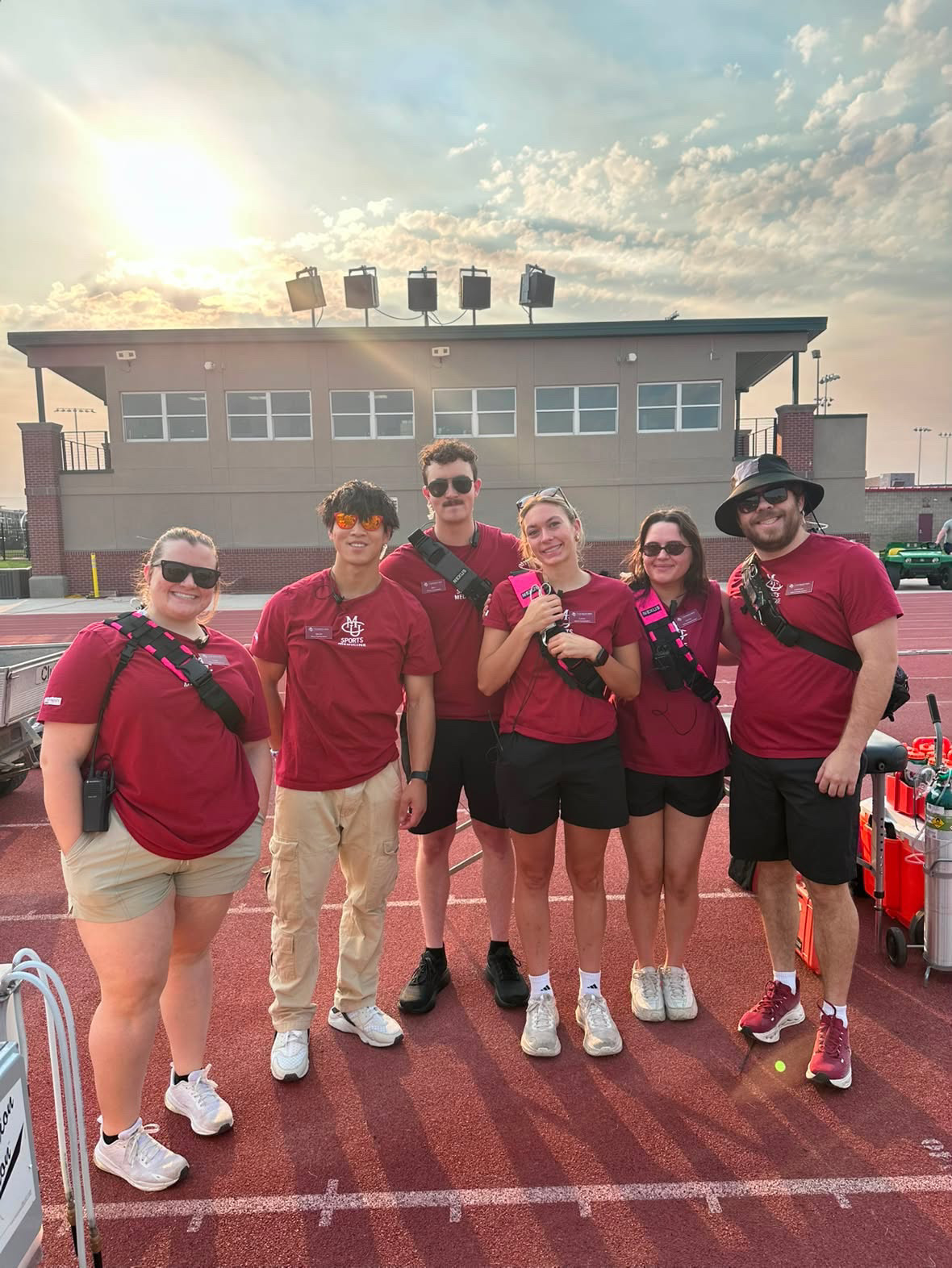
By the time the afternoon brought triple-digit heat to the football practice field at Colorado Mesa University, graduate students Cassie Castleman, Emma Kammerlohr and Ryce Winter had already been working for hours.
Their morning started around 5:45 am inside the athletic training room, where they taped athletes’ ankles and wrists and prepared water and sports drinks for the day ahead.
The morning was part of a routine the three athletic training students have become familiar with this summer. As part of their clinical rotations in CMU’s Master of Science in Athletic Training program, they have spent much of the summer at football practices, working alongside licensed athletic trainers and putting what they’ve learned in the classroom into practice.
By the time practice started, Winter was carrying five water bottles and a Gatorade as he followed the wide receivers up and down the field.
Across the field, Kammerlohr worked with the linebackers while Castleman kept watch over another group of players. With dozens of athletes moving through drills at once, the students were paying attention to the parts of practice most people don’t notice.
They watched for who needed water, who looked tired and who might be showing early signs that the heat was becoming too much.
“You can learn anything from a book or from a lecture but actually being able to apply it every single day and being able to recognize it is important, too,” Kammerlohr said. “You learn about heat illness, but then you don’t actually see it until you come out here.”
The athletic training profession is often misunderstood, with some people confusing athletic trainers with personal trainers and others assuming they simply stand on the sidelines and watch sports.
In reality, athletic trainers are health care professionals trained to prevent, recognize and respond to injuries and medical conditions. Their work can include emergency care, clinical evaluation, rehabilitation and helping injured athletes safely return to activity. Some of their most important work happens before an injury or emergency ever occurs.
Kammerlohr said that can mean looking after athletes “even when they don’t know they need it.” Sometimes, she joked, it comes down to looking at a player and saying, “Please just drink water for me.”
The trainers also monitor the conditions athletes are practicing in. Winter said he uses a wet-bulb globe temperature device, which accounts for environmental factors such as heat, humidity and sun exposure to help determine whether conditions are safe for practice.
Along with prevention, athletic trainers are typically among the first health care professionals to respond to injuries. Their work can begin with emergency care and continue through treatment, rehabilitation and eventually helping an athlete safely return to their sport.
“If they go down or they break something, we’re the first ones there,” Winter said.
Learning what to do in those moments is one reason clinical experience is an important aspect of the program.
The six-semester graduate program combines classwork with supervised clinical rotations, where students work under licensed athletic trainers, known as preceptors, and practice the skills they have learned in class.
During the summer, students typically spend around 25 to 30 hours each week at different clinical sites. Once classes resume, they continue their clinical work alongside their coursework.
Students typically complete two eight-week rotations each semester, moving between different sports, athletes and working environments. Winter will soon begin a rotation at a high school, while Kammerlohr and Castleman plan to move into assignments with CMU Athletics. Other students in their cohort will remain with football before switching rotations later in the semester.
The variety prepares them for moments where several things happen at once and decide what needs their attention first, and Football practice offered plenty of that.
All three students said the pace was one of the things that surprised them most when they began their clinical rotations.
“There’s a lot of things going on all the time. You’re standing in the heat; you’re running around a lot. You can get sore from carrying a water bottle some days,” Kammerlohr joked.
But the long days and constant movement are also showing them why people stay in the profession.
Winter described athletic training as his calling, while Castleman said a lot of the appeal comes from the people around her.
“You are surrounded by a bunch of passionate people all the time,” Castleman said. “I also love that we can actually just take care of them and put them in a better situation mentally and physically.”
By the end of practice, much of the work the students had done that morning may have been easy to overlook.
There were no major emergencies, but there were bottles to refill, athletes to monitor and plenty of small decisions throughout the morning that helped keep everyone healthy enough to stay on the field.
For Kammerlohr, Castleman and Winter, those ordinary moments are becoming part of what it means to care for athletes.
To learn more about the Athletic Training Master’s program, visit the Athletic Training program page.