
Wildland Fire Management student Mathew Carman is putting his training to work on active fire assignments in Montana and New Mexico — and documenting the experience along the way
By the time Mathew Carman reached his first fire, he had already hiked nearly four miles into the Montana backcountry carrying tools, water and gear.
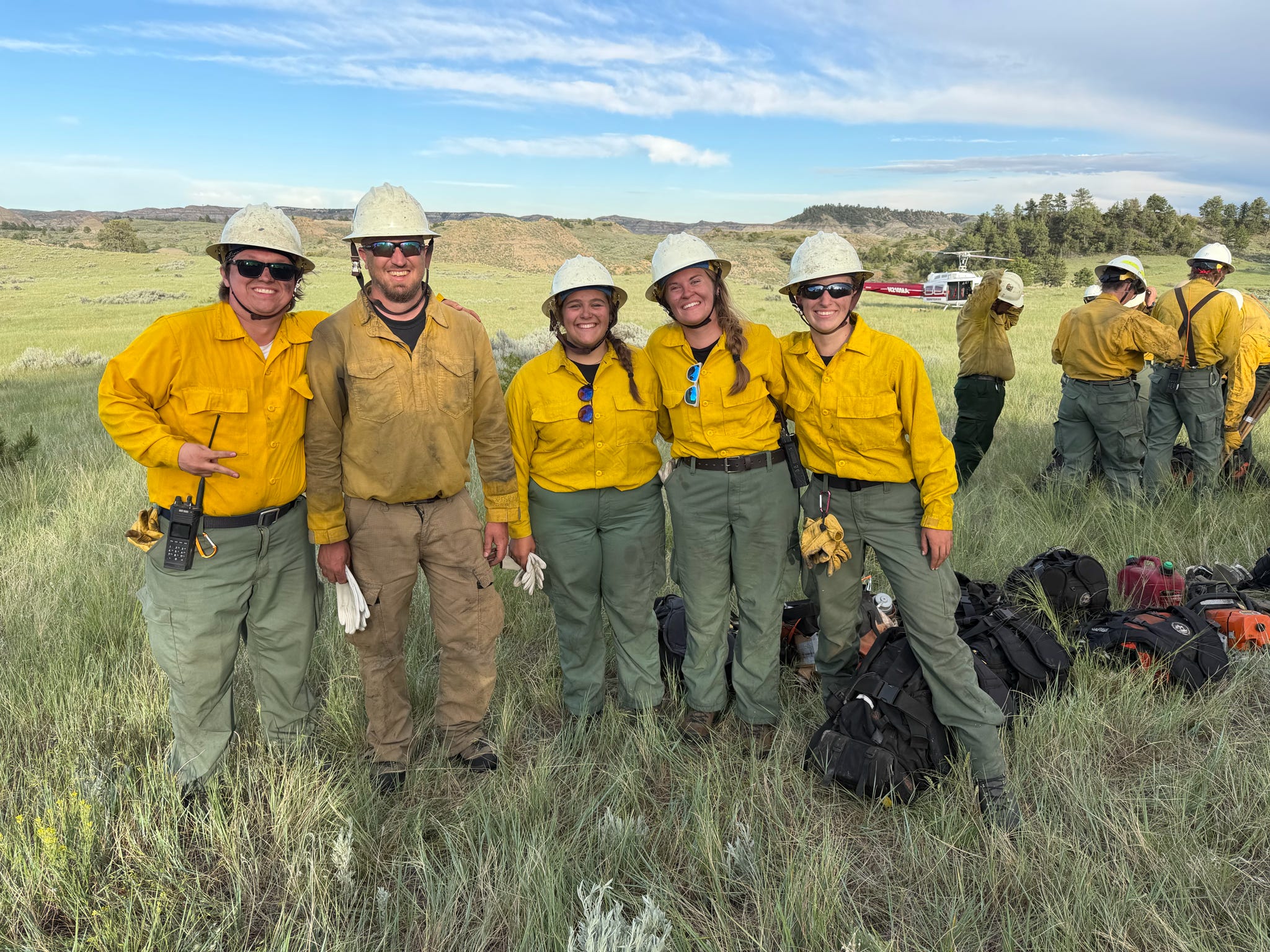
The CMU Tech Wildland Fire Management student is currently part of an internship crew assigned near Jordan, Montana, where days that begin with radio practice and station checks can quickly shift to smoke reports and long hours working the edge of an active fire.
In his assignment journal documenting the experience, Carman’s early entries show the internship moving quickly from preparation to active response. Like many of his classmates, Carman is spending the summer putting classroom lessons to the test as he faces real-world challenges on the fireline.
CMU Tech's Wildland Fire Management program prepares students for wildland fire work in rural and urban outdoor areas. The program combines classroom instruction, site visits, field training exercises and internships with courses that meet National Wildfire Coordinating Group (NWCG) standards.
During his first week, Carman completed paperwork, passed the required pack test, received his fire gear and started learning the daily routine of station life. He and the other interns completed UTV training, engine certification, communications training, saw training and daily physical training.
The early days were focused on preparation. The crew learned how to conduct size-ups, practiced incident command structure, reviewed medical equipment, completed maintenance around the station and gathered fuel samples for fuel moisture measurements. Carman also quickly learned that the work requires adaptability, like packing a better go bag and adjusting to extended staffing when fire activity increased in the area.
Two weeks into his assignment, the crew received its first call.
A smoke report had come in near the Burdick Coulee area west of Hell Creek. Carman and the crew loaded the engine and chase truck, then traveled as far as they could through private ranch roads before setting up camp on a ridge several miles from the fire.
The next morning, the crew hiked in.
“The plan was to hike the 3.8 miles into the fire to begin IA,” Carman wrote, referring to initial attack, the first phase of response when crews work to contain a fire before it grows. “Our hike was slow and methodical. We didn’t want anyone to burn out.”
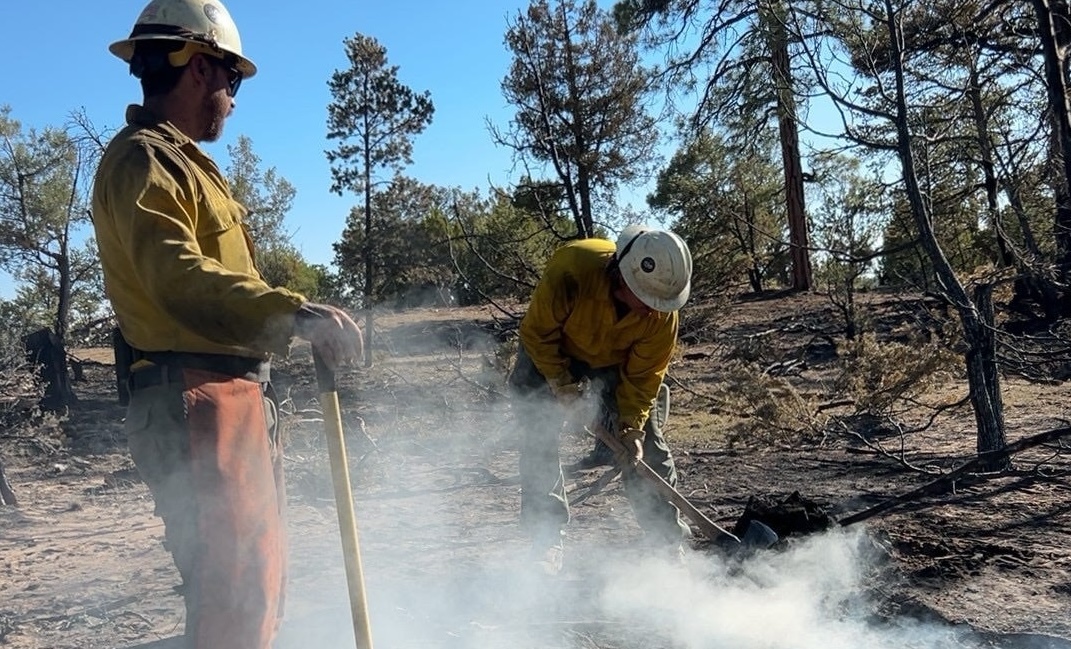
Carman carried a cubee, a collapsible water container, and a Pulaski, a digging and chopping tool that clears vegetation while building fireline. After more than two hours on foot, they arrived at the fire and began working the edges and smothering the flames. Others followed behind to scratch line, clearing a strip of ground to help stop the fire's spread.
The experience gave Carman a first look at the teamwork, physical demands and technical coordination required on a fire. He watched experienced crew members direct the initial attack, assisted with suppression efforts and later helped move downed material farther into the black, the already-burned area of the fire.
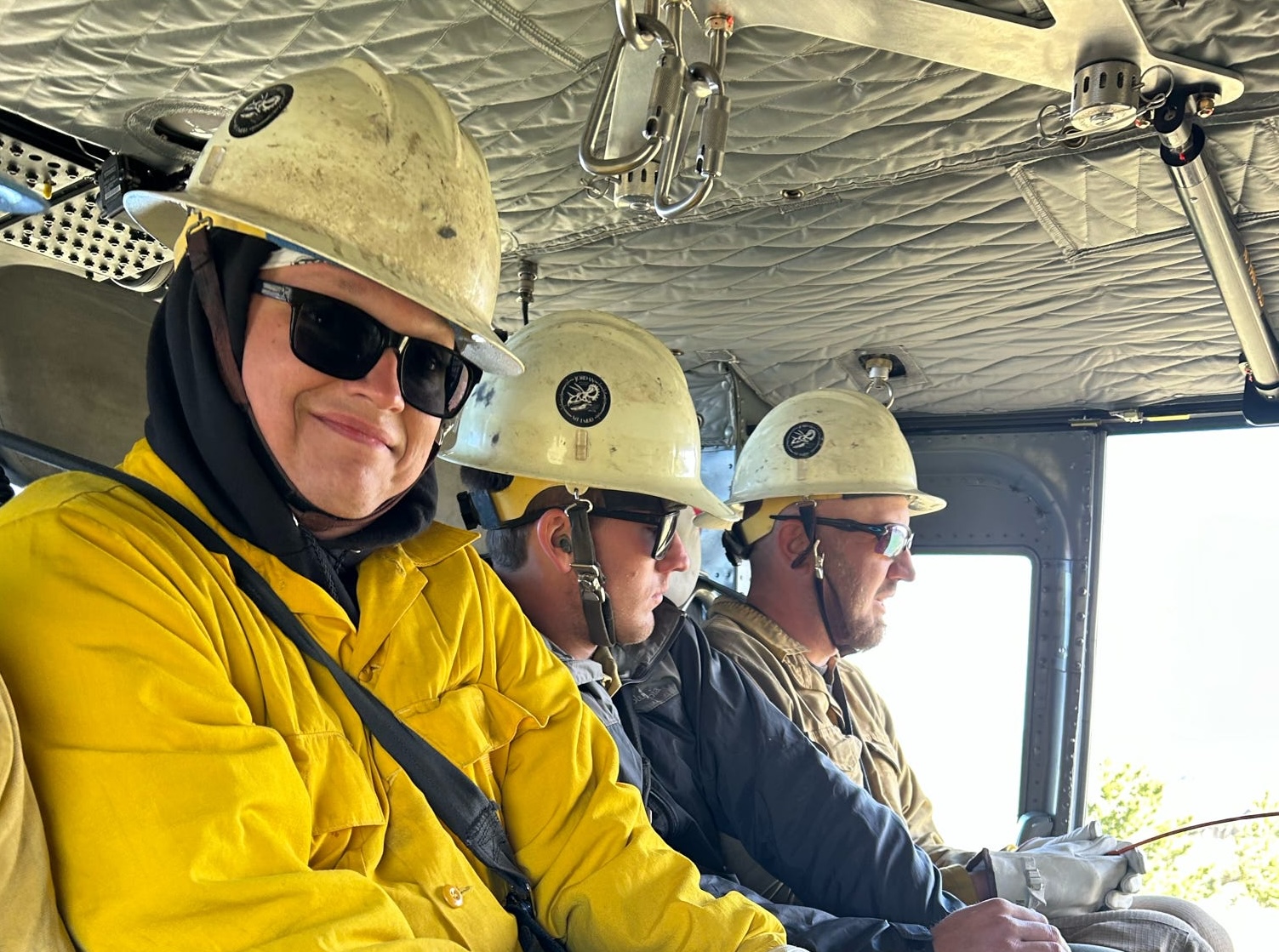
The crew also worked alongside other fire resources, including smokejumpers and aviation support. By the end of the assignment, Carman had responded to his first fire and witnessed how multiple agencies and crews work together during wildfire response.
As the internship continued, Carman’s crew traveled to New Mexico, where the pace intensified almost immediately.
“Day one, hour one, we were on our way to a fire,” Carman wrote.
That day, the crew responded to two smoke reports. One assignment took the crew deep into the Santa Fe National Forest, where Carman rode by UTV through trees and downed timber before hiking nearly two miles uphill carrying a saw. The work included hiking steep terrain, digging line, carrying heavy material, bucking downed wood, assisting with hazard trees and watching helicopter bucket work.
“I think today may be the most physically demanding day I’ve ever put in,” Carman wrote.
The following days brought more fire assignments, patrols, burn restriction conversations with campers and additional lessons in safety and situational awareness.
One incident where a log broke loose on steep terrain and rolled toward crew members left a strong impression on Carman and reinforced the importance of awareness and quick response on the fireline.
In another journal assignment, Carman helped set up a hose lay, a system of hoses used to move water from engines to the fireline. He noted that a crew member trusted him with the right flank hose lay because he had completed S-211 training, and he had the opportunity to apply another skill from the classroom to active conditions.
“I feel like I’m absorbing some really good knowledge out here,” he wrote.
Experiences like Carman’s are built into CMU Tech’s Wildland Fire Management program, where students learn the technical and physical skills needed for wildland fire response. Professionals in the field need a wide range of skills, including technical knowledge like meteorology and ecology, along with operational skills like incident command, aviation management, leadership and backcountry emergency medical procedures.
The program is taught by current and retired career firefighters and incident meteorologists, giving students access to instructors with direct experience in the field. By combining hands-on technical training with the classwork needed for an associate degree, the program equips students like Carman with the skills to step directly into roles with local, state, federal or private fire agencies.
As wildfires continue to affect communities across the West, CMU Tech students like Carman are gaining real experience in a field where preparation and teamwork are essential. Through long days, difficult terrain and active fire assignments, they are learning what it means to serve on the fireline.