
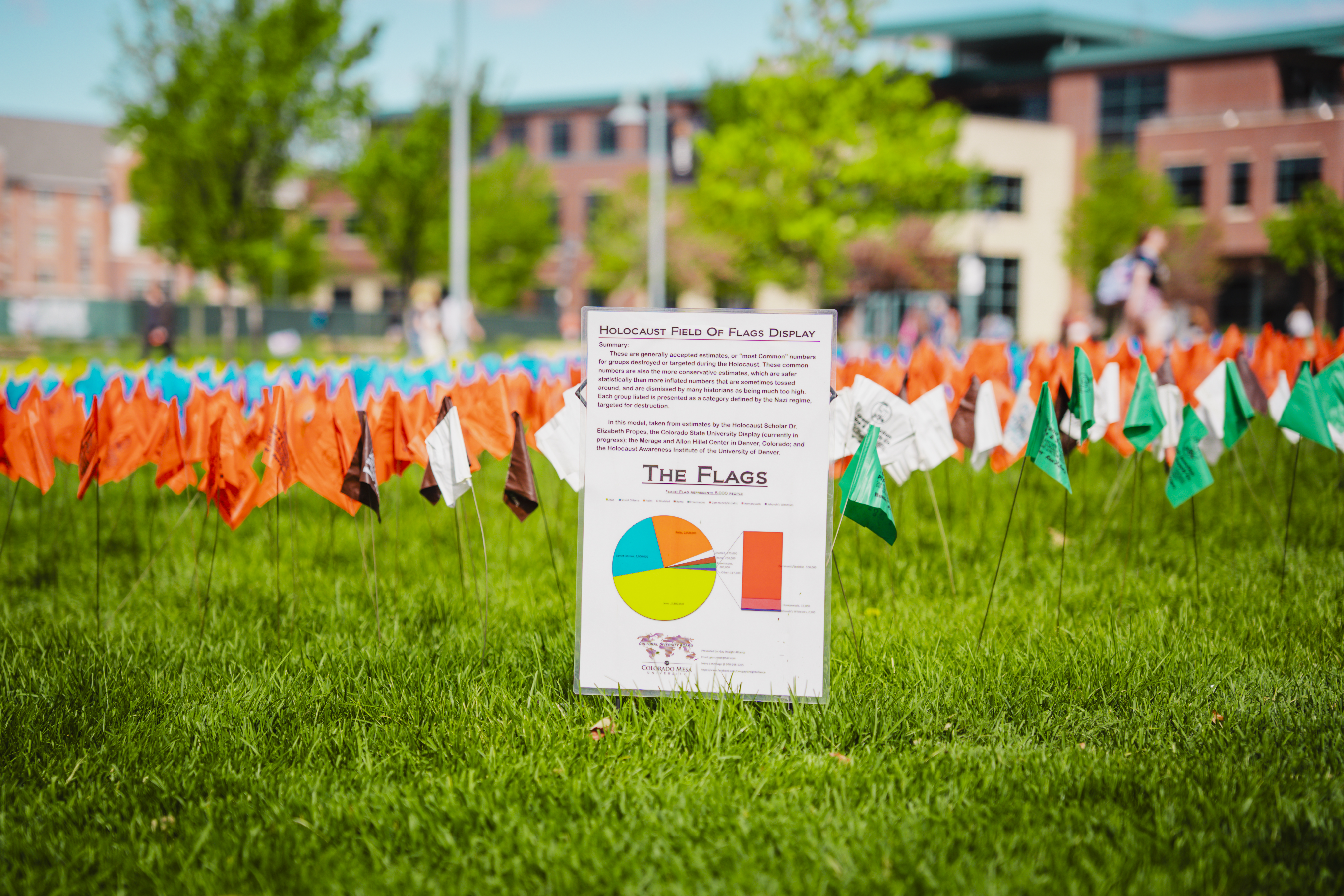
As more than 2,000 flags filled the campus green, a moment of silence marked the opening of Colorado Mesa University’s 23rd Annual Holocaust Awareness Series by honoring the millions of lives represented and setting a tone of remembrance.
Throughout the series, presentations and screenings explored genocide from multiple disciplinary and global perspectives. From literary examinations of Holocaust poetry to memorialization and art expression, each session offered perspectives on the ethical and historical complexities that follow genocide and shape how it is remembered and understood.
Engagement extended beyond the presentations. According to Vincent Patarino, PhD, associate professor of history and founding director of the Holocaust Awareness Series, what stood out most was the level of interaction from attendees. Students, faculty and community members actively participated in discussions, reflecting the collaborative and educational spirit that has defined the series for more than two decades.
“Each session was not only insightful,” Patarino noted, “but the energetic interactions between presenters and the audience were at a high level.”
That engagement was reflected across sessions that challenged attendees to think beyond familiar narratives. James Coburn, lecturer of archaeology and Japanese at CMU, explored cultural genocide through the Japanese colonial period of Korea — an angle that expanded the conversation beyond the European context of World War II.
With many students in attendance, Coburn expressed encouragement at their interest in broader perspectives on genocide. He emphasized the importance of understanding the global scope of wartime atrocities, stating, “It is important that people understand that East Asia had a major role in World War II and that a lot of atrocities also happened outside of Europe.”
Barry Laga, PhD, professor of English, challenged participants to consider the responsibilities of art in depicting trauma. He focused on the ways the past is represented through memorials, monuments and museums, highlighting how design and artistic expression can influence the way the Holocaust is interpreted.
Drawing on a range of examples, his presentation explored how artists have approached representing events that often resist clear explanation. Rather than offering a straightforward perspective, Laga invited viewers to engage with history on both an emotional and intellectual level, noting that the question is not simply whether the Holocaust should be remembered, but how it is remembered.
The series concluded with the Project Heroes event, an immersive keynote experience that brought the week’s themes into a powerful and forward-looking perspective. For students, many walked away with a deeper look into the Holocaust and other historical events, gaining new perspectives on how they are remembered and their global impact. For history major Nadya Forest, the series offered a more personal and nuanced view, highlighting stories of resilience alongside loss.
“I thought that it helped to give a new view on Jews and what happened in the Holocaust,” Forest said. “They did not go down without a fight. They shared stories of people who were not so different than me doing great things because they needed to, and I think that is a story worth telling about people who are also seen as victims.”
Organizers and presenters highlighted the continued necessity of the series, pointing to the importance of creating spaces where complex history can be explored with care and understanding. Daniel Rosenberg, PhD, associate professor of English and series presenter, reflected on both the impact of the conversations and the community they brought together.
“It’s a particular joy to see high school students and retirees in one room together, grappling with complex issues, learning with and from each other,” Rosenberg said.
As people and events pass from living memory into history, he noted that programs like the Holocaust Awareness Series will only become more important, expressing hope that it continues to grow and thrive in the years ahead.
As time moves the Holocaust further into the past, events like the Holocaust Awareness Series take on a greater responsibility. At CMU, remembrance is not confined to a single moment or event, but lives in the shared experiences of those who gather to learn, question and reflect. In that way, the series becomes more than a week of programming — it becomes part of a larger story shaped by the voices, perspectives and conversations of the community it brings together.
-
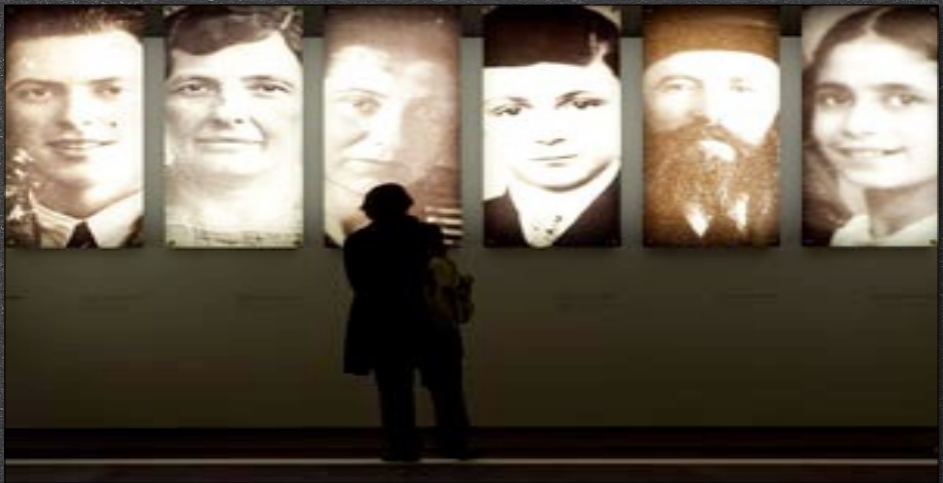
Picture from a slide from Laga's presentation.
-
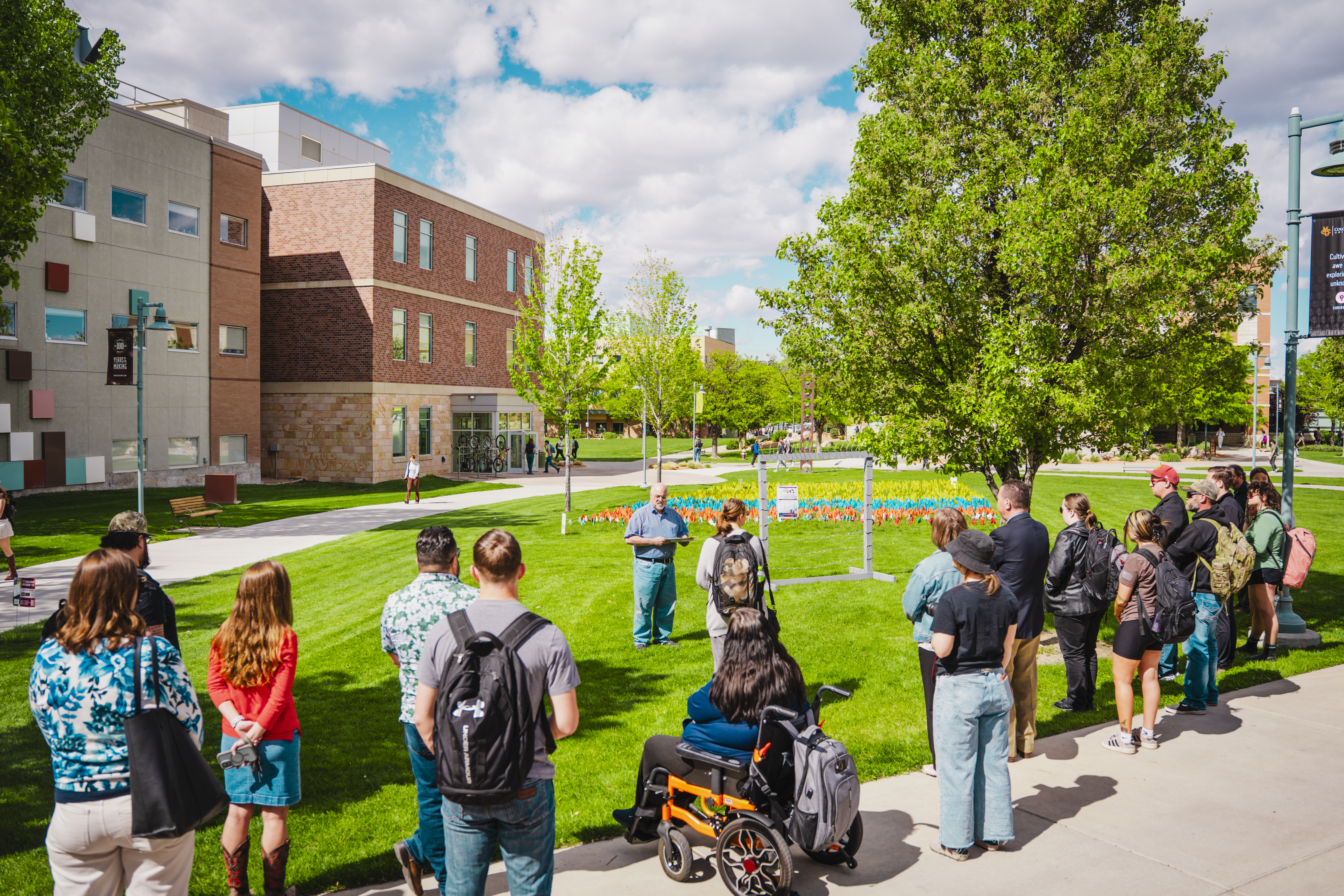
Patarino kicking off the series at the Field of Flags.